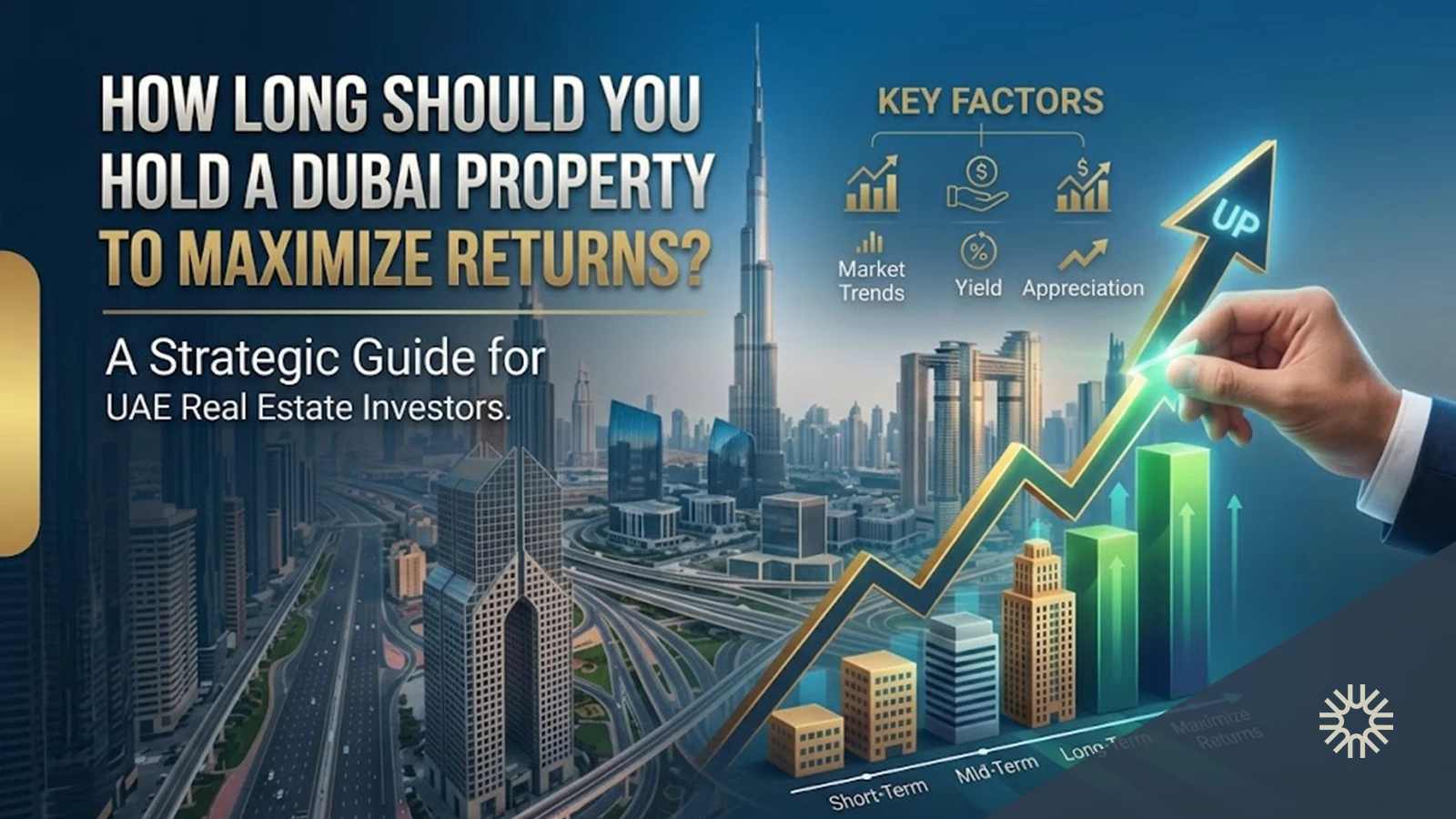
What Separates a Good Dubai Investment From a Great One?

Every week, someone tells us they "found a good deal" in Dubai. A studio in a new tower, an off-plan apartment with a flashy payment plan, a villa a broker swore was "undervalued." Some of these really are good. Most are just available. There's a difference, and in a market moving as fast as Dubai's is right now, that difference is worth real money.
Dubai's property market isn't short on activity. The Dubai Land Department recorded AED 252 billion in transactions during the first quarter of 2026, a 31% jump in value from the same period last year. By the end of June, that momentum had pushed first-half sales to roughly AED 286.4 billion across more than 79,000 transactions. Numbers like that tell you the market is healthy. They don't tell you which specific unit in which specific building is going to make you money and which one is going to sit half-rented while the service charges pile up. That's the gap we spend our time in at Unique Properties, and it's the gap this post is about.
Good Investments Follow the Headlines. Great Ones Read Underneath Them.
A good investment checks the obvious boxes: right area, reasonable price per square foot, a developer with a track record. That's not nothing. But it's also what everyone else is looking at, which means the easy wins get bid up fast.
A great investment starts with the same checklist and then asks harder questions. Who is actually going to live here, and for how long? What happens to this specific pocket of supply when 120,000 new units land across the city this year, which is the largest handover volume Dubai has ever recorded in a single year? Is the yield you're being quoted a gross number dressed up to look better than it is?
That last one matters more than most buyers realize. Across Dubai, gross rental yields currently sit in the 6% to 8% range, with well-located apartments pulling ahead of villas and premium addresses. JVC and similar mid-market communities can advertise gross yields above 9%, but once you subtract service charges, typical vacancy, and management costs, that number often settles closer to 5.5% to 6.5% net. A Downtown apartment quoted at 5% to 6% gross might only lose half a point after the same adjustments, because it experiences far less turnover. On paper, JVC looks like the better deal. In practice, the gap between the two shrinks considerably once you're honest about what actually lands in your account. We walk clients through this gross-to-net conversion on every single deal we bring them, because a headline yield is a marketing number, not an investment thesis.

Timing Is a Skill, Not Luck
Dubai's market doesn't move in one direction at once. While overall transaction value climbed sharply through the first half of 2026, price growth in several rental segments has been cooling in a controlled, deliberate way, easing from close to double digits in January toward the low single digits by May. That's not a warning sign. It's a market maturing after an exceptional run, and it changes what "good timing" actually means right now.
A good investor buys because the market is going up. A great investor buys because they understand where a specific community sits in its own cycle, independent of what the citywide headline number is doing. Right now, that means paying close attention to areas absorbing new supply well versus areas where 15,000-plus new units are scheduled to land within the next two years and could soften rents before they soften prices. It means recognizing that foreign investment climbed to AED 148.35 billion in Q1 2026, up 26% year on year, which tells you international capital still trusts this market deeply, but it doesn't tell you whether the specific building you're eyeing will still command a premium in three years once its neighboring towers are handed over.
The Investor Base Is Getting Sharper, and So Should You
One number stood out to us more than most this year: the number of active investors in Dubai's Q1 2026 real estate market grew 8%, reaching 48,448, with 29,312 of them brand new to the market. That's a lot of new capital and a lot of new competition. When more people are chasing the same visible opportunities, the "good" deals get crowded fast and the pricing edge disappears. The "great" deals, the ones sitting a layer beneath the obvious listings, require someone who actually knows the building, the developer's delivery history, and the community's absorption rate. That's not something you get from a portal search. It's something you get from people who work this market daily.
What We Actually Look For
When our team evaluates a property before it ever reaches a client, we're checking three things beyond price: realistic net yield after every cost, the community's supply pipeline for the next 24 months, and whether the developer has a history of delivering on schedule. A property can pass two of three and still be a bad idea. We only bring forward the ones that pass all three, because a good deal that turns into a mediocre hold isn't actually a good deal.
That's the whole difference between good and great. Good is a defensible decision. Great is a decision that still looks smart five years from now, after the market has moved twice and the hype around today's launches has faded.
If you want a second opinion on a property you're already considering, or you'd rather start from scratch with a shortlist built around your actual goals, browse our current listings or book a consultation with our advisory team. We'll tell you honestly whether what you're looking at is good, great, or something to walk away from.