How Infrastructure Timing Can Influence Your Dubai Property Investment
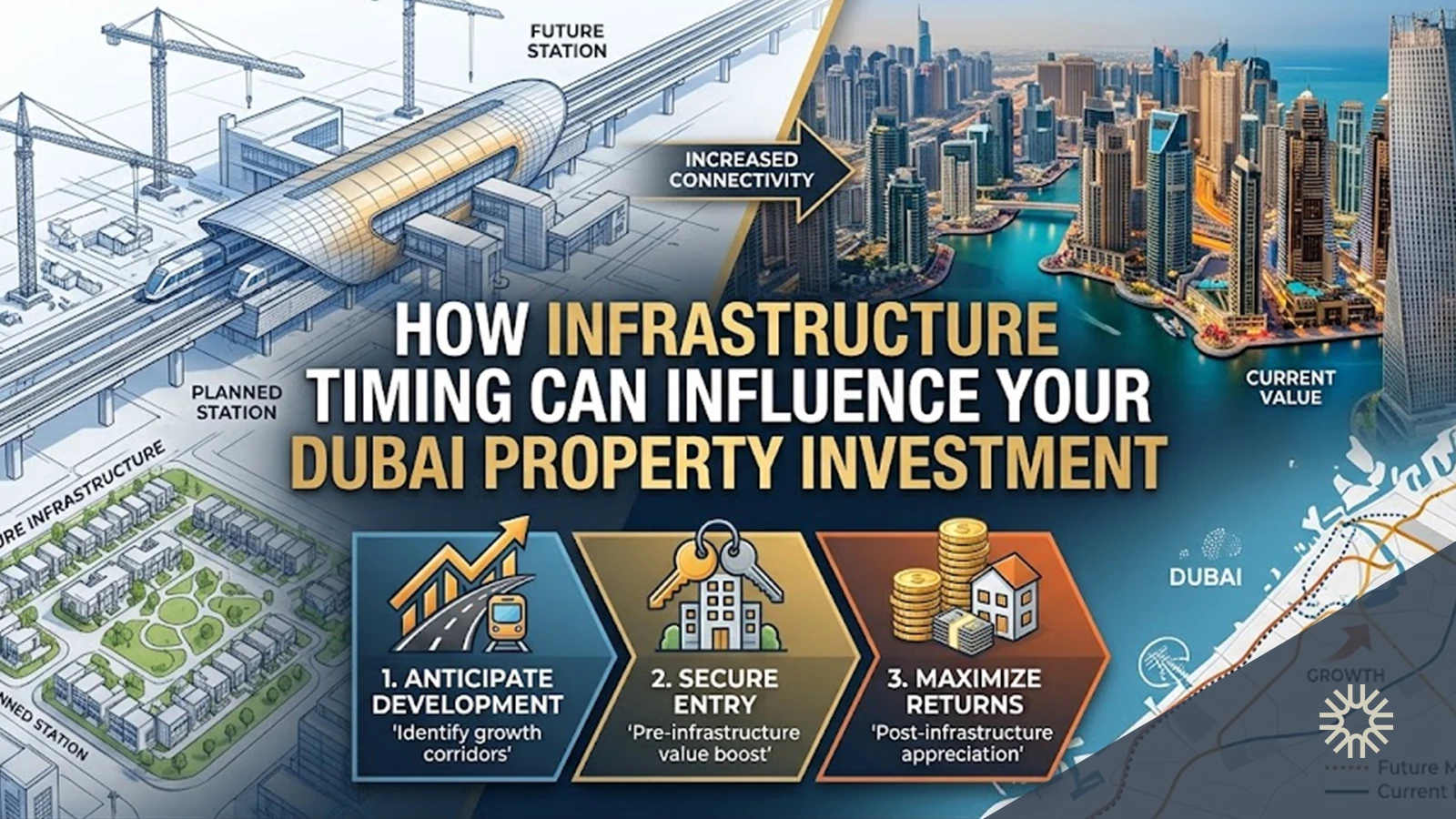
Every investor asks us the same question in a different way: "Is now the right time to buy?" At Unique Properties, our answer usually comes back to something less glamorous than market sentiment: infrastructure. Roads, metro lines, and utility networks move slower than headlines, but they move property values more reliably than almost anything else in this city.
Dubai's Q1 2026 numbers back this up. The Dubai Land Department (DLD) recorded AED 252 billion in transaction value for the quarter, a 31% jump year-on-year, across 60,303 transactions. That's not a speculative spike. It's a market that keeps absorbing new supply because the city keeps building the infrastructure that supports it, from road corridors to transit lines to entire districts planned around connectivity.
If you're weighing when to buy rather than just where, the timing of infrastructure delivery deserves as much attention as the unit itself.
Why Timing Matters More Than People Think
Most buyers evaluate a property on what it looks like today: the view, the finish, the neighborhood as it currently stands. Fewer buyers ask what that neighborhood will look like once a road widens or a metro station opens two kilometers away. That gap between current price and future utility is where the real upside sits.
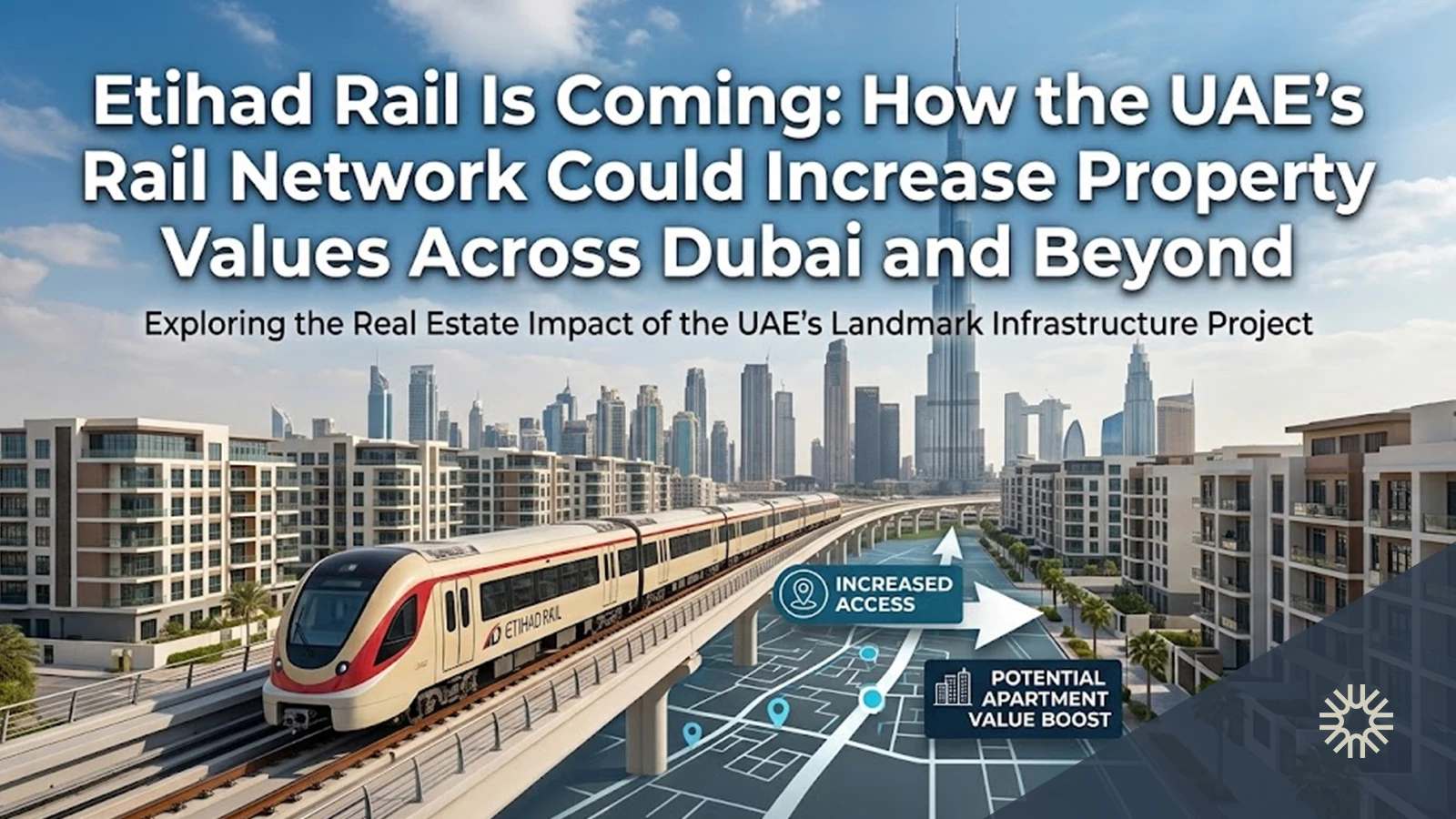
Dubai has already run this experiment twice. When the Red and Green Metro Lines opened in 2009 and 2011, districts connected to new stations saw measurable uplifts in both rent and capital value within 18 to 36 months of the lines going operational. CBRE's research on the Red Line found properties within a 15-minute walk of stations appreciated by an average of 43.8%. That wasn't immediate. It built over time, as residents adjusted their commuting habits and developers responded with new supply around the stations that worked.
The pattern tends to repeat in phases:
- Early phase (5 to 7 years before completion): Pricing is inefficient. Upside is highest, but so is execution risk.
- Mid phase (2 to 4 years before completion): Progress becomes visible. Market awareness catches up, and prices begin adjusting.
- Late phase (0 to 2 years before completion): A large share of the expected gain is already priced in. The easy money has moved on.
The Blue Line: A Live Case Study
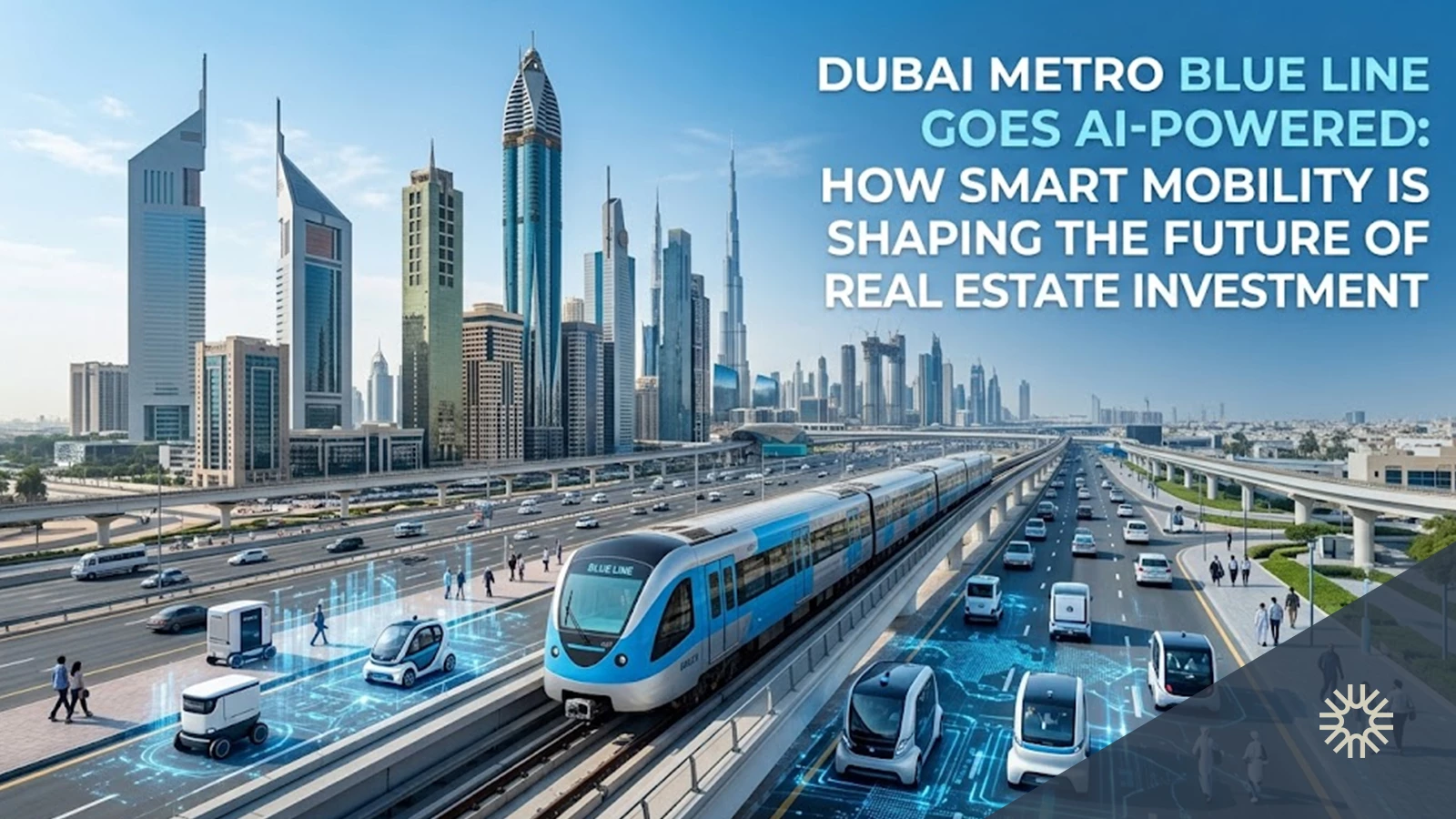
The Dubai Metro Blue Line is the clearest example running right now. It's a 30-kilometre extension with 14 new stations linking Dubai Silicon Oasis, Academic City, Business Bay, Dubai Marina and JBR, and Expo City. Construction reached roughly 10% completion in early 2026 and is tracking toward 30% by year-end, with the line scheduled to open on September 9, 2029. The project carries an AED 18 billion price tag and an estimated AED 56.5 billion in economic benefit by 2040 through reduced travel time and lower traffic volumes.
We're already seeing what industry data calls the anticipatory pricing effect. Communities that were previously considered peripheral, such as International City and Dubai Silicon Oasis, have posted rental gains of over 20% in the past year, well ahead of the line actually opening. That's the market pricing in future access before it exists, which is exactly the window where an early buyer benefits most.

Globally, properties within 500 to 800 meters of a metro station typically command premiums of 8% to 25% over comparable non-transit-linked stock, depending on the city. Locally, DLD-linked data on comparable projects points to 22% to 30% appreciation for homes within 500 meters of a station. Whether the Blue Line follows the upper or lower end of that range will depend on how quickly each district around it develops the retail, schools, and community infrastructure that make transit access actually useful day to day, not just on a map.
It's Not Just Metro Lines
Roads matter too, and they tend to get less attention because they're less photogenic than a metro map. The Al Khail Road Improvement Project, awarded to the RTA in 2024, is upgrading a 15-kilometre arterial route that feeds several of Dubai's busiest residential clusters. Combined with metro expansion, this kind of road investment is projected to lift real estate prices in connected areas by 3.5% to 5.2% by mid-2026, with the strongest effect showing up in Academic City, Al Furjan, Arjan, and JVC.
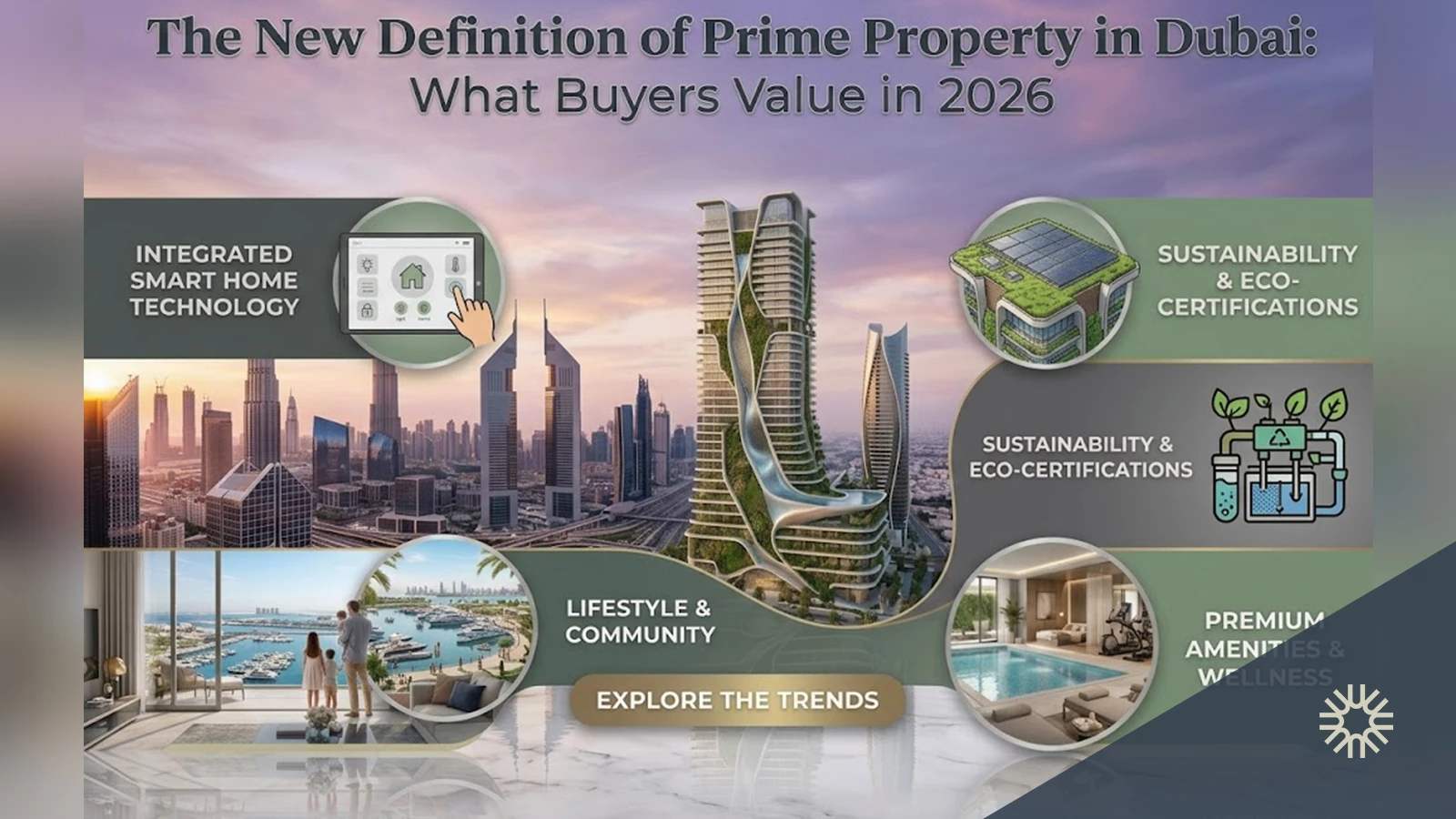
Lifestyle infrastructure plays a quieter but real role as well. Dubai now has more than 3,000 parks and over 1,200 kilometers of cycling tracks, and beachfront communities have held 6% to 8% annual appreciation fairly consistently. Schools and hospitals matter too. A community with strong healthcare and education access simply leases faster, which is the kind of detail that shows up in occupancy numbers before it shows up in headline prices.
What This Means for Your Buying Window
Here's the practical takeaway. If you're buying purely on today's amenities in an already-mature area like Downtown or Marina, you're buying stability, not growth. That's a legitimate strategy, but it's a different one. If you're trying to capture appreciation, the data points toward districts in the early-to-mid infrastructure phase right now: areas touching the Blue Line corridor, or communities benefiting from road upgrades that haven't fully repriced yet.
The catch is that this window doesn't stay open indefinitely. As construction visibility increases and more of the expected gain gets priced in, the entry cost rises and the remaining upside shrinks. Buying two years into a five-year infrastructure build is a very different trade than buying at year one.
Where Unique Properties Fits In
We track DLD transaction data and infrastructure timelines specifically to flag these windows for our clients before they close. It's not about chasing every announcement, it's about matching your entry point to where a district actually sits in its growth curve.
If you want to see which communities are currently in that early-to-mid infrastructure phase, browse our current listings or use our Find a Property tool to filter by area and project stage. And if you'd rather talk it through directly, our team can walk you through the numbers for your specific budget and timeline.