Dubai's New Metro Blue Line: The 14 New Stations That Are Already Repricing Nearby Properties
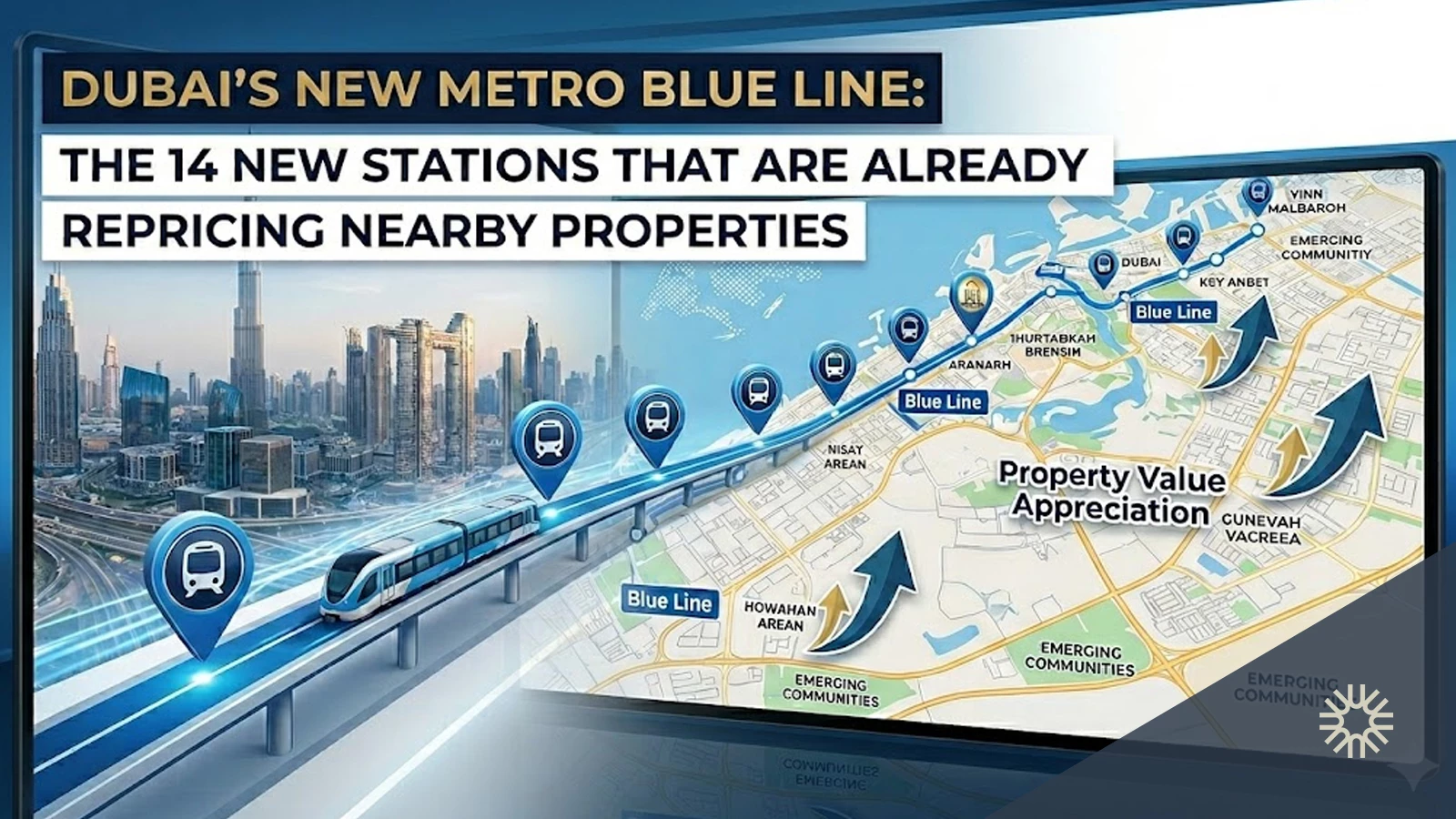
Dubai’s real estate market has always moved ahead of infrastructure, but the upcoming expansion of the Dubai Metro Blue Line is creating something different: a measurable repricing effect before completion.
For investors watching Dubai closely, the story is no longer just about luxury launches or branded residences. It is about connectivity. History has already shown that metro-linked communities outperform isolated districts over time, both in rental demand and capital appreciation. Now, with 14 new stations planned across key growth corridors, the Blue Line is beginning to reshape investor behavior long before the first train arrives.
At Unique Properties, we are already seeing buyers shift attention toward areas positioned around future Blue Line access points. The conversation is changing from “What’s affordable today?” to “What becomes premium tomorrow?”
Why the Blue Line Matters More Than Previous Expansions
Dubai’s earlier metro expansions transformed districts like Dubai Marina, JLT, and Business Bay into highly liquid property markets. Accessibility became one of the strongest drivers of both rental occupancy and resale value.
The Blue Line is expected to extend this effect into emerging residential and mixed-use communities that previously depended heavily on private transport. According to public infrastructure announcements, the route will connect densely populated residential districts, academic zones, commercial corridors, and future urban developments.
The scale alone is significant:
- 14 new stations planned
- Roughly 30 kilometers of additional connectivity
- Direct integration with existing Red and Green Lines
- Faster access to Dubai International Airport and eastern growth corridors
- Improved commuting capacity for thousands of daily residents
Dubai’s infrastructure planning historically correlates with long-term property appreciation. Data trends from the Dubai Land Department and market insights from Property Finder consistently show stronger transaction activity near transport-linked communities.
But unlike previous cycles, today’s buyers are acting earlier.
The 14 Stations Creating the Biggest Real Estate Attention
While the final impact will vary by micro-location, several upcoming Blue Line districts are already experiencing heightened investor activity.
Dubai Creek Harbour
Few communities stand to benefit more than Dubai Creek Harbour.
Already positioned as one of Dubai’s long-term waterfront growth zones, improved metro access could accelerate its transition into a fully mature urban district. Investors who previously viewed Creek Harbour as slightly disconnected from central Dubai are beginning to reconsider.
We are seeing increased interest from:
- End-users prioritizing daily commute efficiency
- International buyers seeking future-ready infrastructure
- Investors targeting higher tenant retention
The combination of waterfront lifestyle, new retail development, and metro accessibility creates the type of infrastructure-backed appreciation Dubai historically rewards.
Dubai Silicon Oasis
Dubai Silicon Oasis has long been attractive for affordability and strong rental yields. However, transport limitations kept pricing below comparable connected communities.
That gap may not remain for long.
As Blue Line connectivity improves, Silicon Oasis could evolve from a value-driven community into a more balanced live-work district. Technology professionals, startup founders, and families increasingly prioritize transit-linked neighborhoods with lower entry pricing.
This creates a compelling opportunity for investors entering before infrastructure completion.
International City
Historically known for affordability rather than prestige, International City may become one of the Blue Line’s biggest transformation stories.
Metro connectivity changes perception.
Areas once considered peripheral often gain:
- Higher tenant demand
- Reduced vacancy pressure
- Improved retail development
- Increased developer interest
- Better resale liquidity
This does not necessarily turn every affordable district into Downtown Dubai overnight. But in Dubai, infrastructure frequently compresses the gap between secondary and primary markets faster than many investors expect.
Mirdif and Al Warqa
Family-focused areas like Mirdif and Al Warqa are also drawing attention because metro access historically increases demand among long-term residents rather than short-term speculative buyers.
This matters.
Communities supported by stable family occupancy often experience:
- Lower volatility
- Stronger end-user demand
- More resilient rental performance
- Consistent long-term appreciation
For investors focused on sustainable returns rather than rapid flipping, these districts may become increasingly attractive over the next several years.

Infrastructure Is Becoming the New Luxury
Dubai’s market is evolving.
In previous cycles, luxury branding alone could drive pricing momentum. Today’s buyers are more analytical. They evaluate:
- Commute efficiency
- Urban planning
- Walkability
- Transit integration
- School access
- Future infrastructure spending
This is especially true among international investors relocating businesses or seeking residency pathways through property ownership.
A branded apartment without connectivity may struggle to outperform a well-positioned community with strong infrastructure integration.
The Blue Line reinforces a broader trend already visible across Dubai’s property market: infrastructure-led investing is becoming smarter investing.
Why Investors Are Moving Before Completion
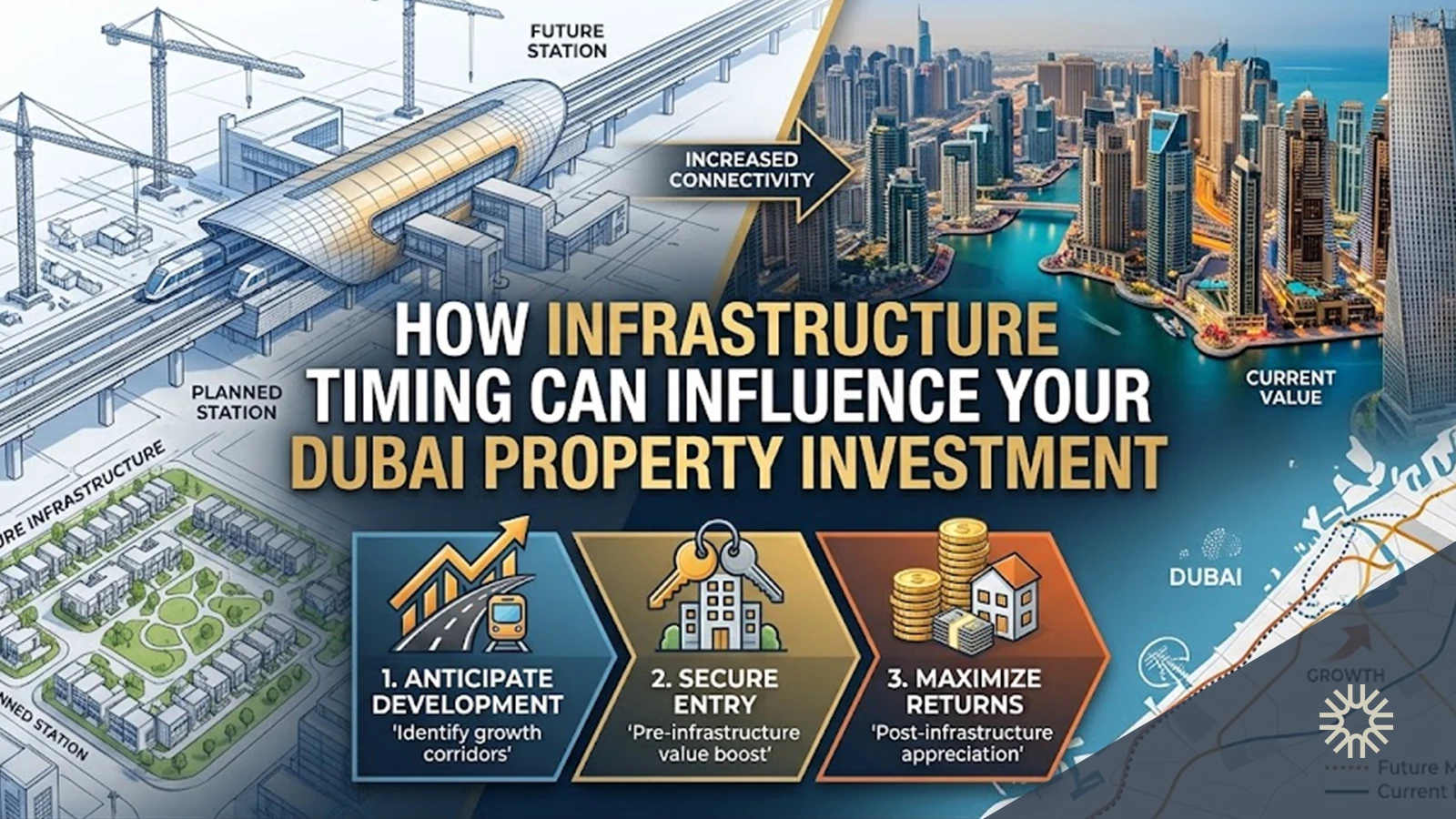
One of the most important lessons from Dubai’s previous metro expansions is timing.
The strongest upside historically occurred before infrastructure delivery became fully priced into the market.
Once stations open and accessibility becomes tangible, prices often adjust rapidly. By then, much of the early investor advantage has already narrowed.
Today, buyers are entering earlier because:
- Dubai’s population growth remains strong
- Demand continues exceeding supply in many prime areas
- Infrastructure announcements carry greater investor confidence than before
- Institutional capital is increasingly active in Dubai real estate
At Unique Properties, we are seeing investors specifically request:
- Off-plan projects near future stations
- Communities within walking distance of planned connectivity
- Family districts with improving transportation access
- Mid-market areas with future repositioning potential
This is no longer speculative behavior alone. It is an infrastructure-driven market strategy.
Rental Markets Could Shift Dramatically
Metro proximity does not only impact sale prices.
Rental performance often strengthens significantly in transit-linked areas because tenants increasingly prioritize:
- Lower transportation costs
- Reduced commute times
- Easier business district access
- Better long-term convenience
This becomes especially important as Dubai continues attracting:
- International professionals
- Remote business operators
- Entrepreneurs
- Skilled expatriates
- Corporate relocations
Communities once considered “far” can quickly become highly practical once integrated into Dubai’s expanding metro network.
That shift often translates into:
- Higher occupancy rates
- Faster leasing cycles
- Better tenant retention
- Stronger rental growth
The Bigger Picture: Dubai Is Expanding Beyond Traditional Prime Areas
The Blue Line is not simply a transport project. It is part of Dubai’s broader urban expansion strategy.
The city is gradually decentralizing opportunities away from only a few traditional luxury districts. New infrastructure corridors are creating multiple high-potential investment zones simultaneously.
That matters because future winners may not always be the communities already priced at peak premiums.
Instead, some of the strongest opportunities could emerge in districts still transitioning from “emerging” to “established.”
Investors who recognize infrastructure momentum early often position themselves ahead of broader market repricing.
Final Thoughts
Dubai’s new Metro Blue Line is already influencing how investors evaluate property opportunities across the city. The 14 planned stations are not merely transportation upgrades; they are catalysts for long-term urban value creation.
From Dubai Creek Harbour to Silicon Oasis and International City, infrastructure is beginning to reshape pricing psychology well before project completion.
For investors, the opportunity may not simply be buying prime property. It may be identifying tomorrow’s prime locations before the market fully catches up.
At Unique Properties, we continue tracking the communities most likely to benefit from Dubai’s next infrastructure-driven growth cycle
Ready to position yourself ahead of the market?
View Properties or Book a Consultation with the Unique Properties team today.
Table Of Content
- Why the Blue Line Matters More Than Previous Expansions
- The 14 Stations Creating the Biggest Real Estate Attention
- Infrastructure Is Becoming the New Luxury
- Why Investors Are Moving Before Completion
- Rental Markets Could Shift Dramatically
- The Bigger Picture: Dubai Is Expanding Beyond Traditional Prime Areas
- Final Thoughts
- Why the Blue Line Matters More Than Previous Expansions
- The 14 Stations Creating the Biggest Real Estate Attention
- Infrastructure Is Becoming the New Luxury
- Why Investors Are Moving Before Completion
- Rental Markets Could Shift Dramatically
- The Bigger Picture: Dubai Is Expanding Beyond Traditional Prime Areas
- Final Thoughts