Branded Residences Are Everywhere in Dubai. Do They Actually Outperform on Resale?
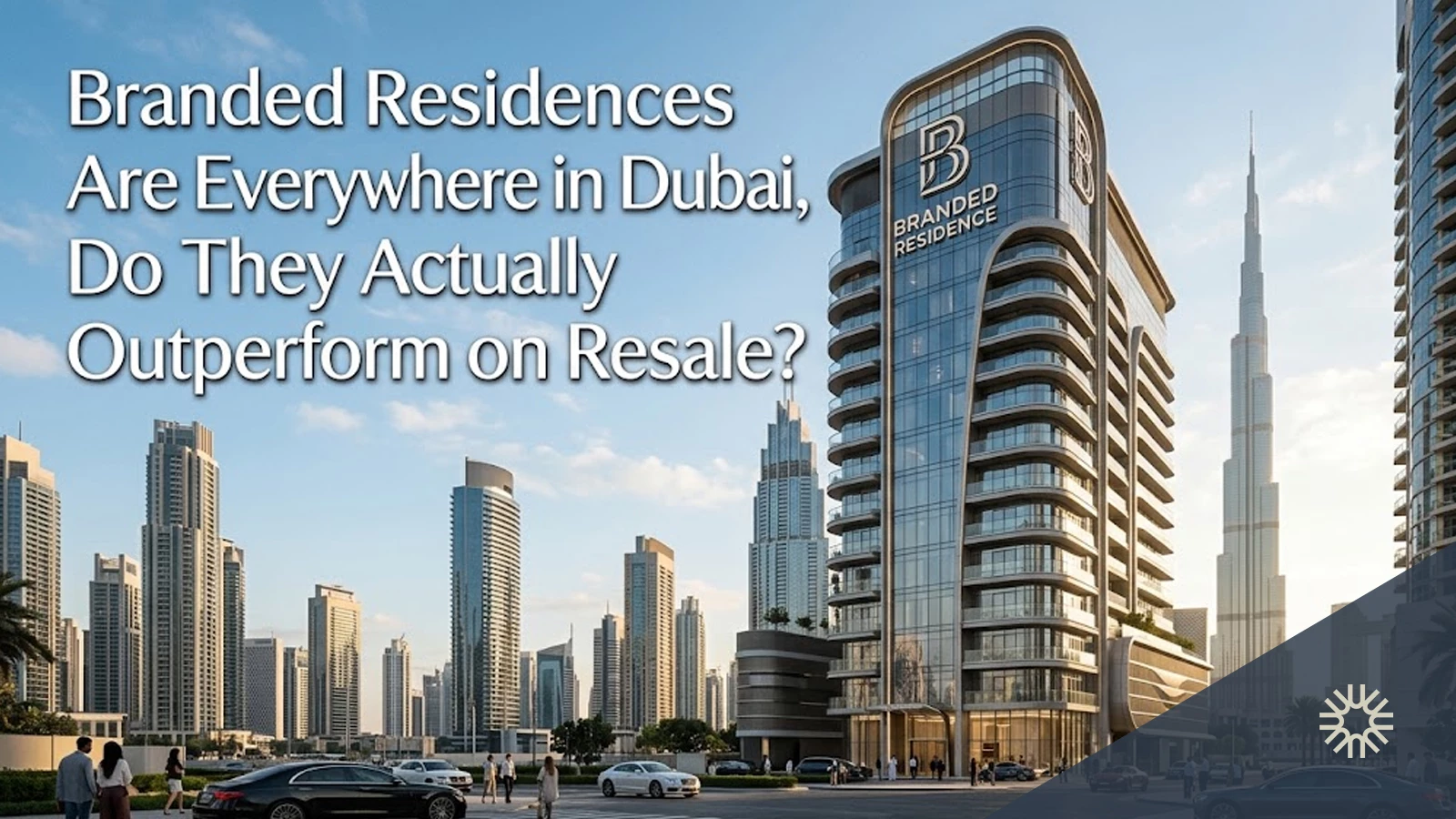
Drive through Business Bay, Dubai Marina, or Palm Jumeirah today and you'll pass a Bugatti tower, an Aman-branded block, a Bulgari residence, and at least two more launches with a fashion house's name on the lobby. Branded living has gone from a niche flex for the ultra-wealthy to one of the most crowded categories in Dubai's off-plan pipeline. By the end of 2025, the city had 166 branded residence projects on the ground, totaling nearly 52,000 units, and 34 of those projects launched in that year alone.
At Unique Properties, we get asked some version of the same question almost weekly: is the brand premium actually worth paying for, or are buyers just financing someone else's marketing budget? We wanted to answer it with numbers instead of vibes.
What the data actually shows
Dubai's branded residences closed 2025 at an average achieved price of roughly AED 3,777 per square foot, up about 15% from the year before. That's not a soft market. At the very top, Atlantis The Royal posted the highest achieved price per square foot in the city, north of AED 18,000, with Jumeirah Asora Bay and Aman Residences close behind. These aren't paper valuations. They're closed transactions.
Now the part people actually care about: the premium over non-branded stock. Industry estimates land in a fairly wide band, somewhere between 25% and 45% depending on location, brand tier, and how "comparable" the non-branded benchmark really is. We've seen it run tighter in secondary clusters like JVC and wider in trophy waterfront addresses like Palm Jumeirah, where the brand isn't just decorating the building, it's the reason the building exists.
Here's the thing that number alone doesn't tell you: a premium at launch and a premium at resale are two different animals. Dubai Land Department transaction records and the listing data we track through Property Finder both point to the same pattern. Branded units in established, well-managed towers tend to hold their premium reasonably well on resale, sometimes even widen it if the operator's reputation has improved since handover. Branded units in smaller, lesser-known brand tie-ups, especially ones without an actual hospitality operator running day-to-day services, have shown a much wider spread of outcomes. Some hold. Some give back most of the premium the moment the launch hype fades.

Why the premium exists, and where it thins out
Three things consistently drive resale strength in branded stock, based on what we're seeing move through our own listings and the wider transaction data:
Operator involvement, not just a logo. A tower actually run by a hotel group, with real facilities management, housekeeping-on-demand, and a front desk, behaves differently in resale than a tower that simply licensed a name for the marble in the lobby. Buyers pay for the service layer as much as the brand.
Location scarcity. A branded tower on a stretch of coastline where no more land is coming holds its premium far better than a branded tower in a district where three more branded launches are announced next quarter. Dubai's own supply pipeline is the biggest risk to future premiums here. When 34 new branded projects land in a single year, some of that "exclusivity" gets diluted whether the brand likes it or not.
Track record of the brand in the market. Brands with several completed, well-run buildings in Dubai already, rather than a first-time entrant, tend to command steadier resale confidence. Buyers have seen the after-sales experience play out before and price accordingly.
Where the premium is thinnest: smaller units bought purely for the badge, in buildings still years from handover, in areas with heavy future branded supply. That's the profile most likely to see resale prices settle closer to the surrounding non-branded market than buyers expected at launch.
Our take
We're not against branded residences. Some of the strongest, most liquid resale performers we've handled in the last two years have carried a brand name, and clients who bought early in the right tower have done very well. But "branded" on its own isn't a resale strategy. It's a feature, and like any feature, it needs to sit on top of fundamentals that would matter anyway: location, developer track record, unit mix, and realistic supply in the surrounding area over the next five years.
Dubai's overall transaction volumes give useful context here too. The city recorded well over AED 500 billion in real estate transactions in a single recent year, and branded stock is still a relatively small slice of that total. That scarcity is part of the appeal. It's also exactly why buyers should be selective rather than assuming every branded launch will behave the same way on exit.
If you're weighing a branded purchase against a comparable non-branded unit in the same community, the honest answer is: run the numbers on the specific building, the specific operator, and the specific micro-location before you decide the name on the lobby is worth the extra cost per square foot. Sometimes it clearly is. Sometimes a well-located non-branded unit two streets over will outperform it on a five-year hold.
Want to see how this plays out for a specific project you're considering? Our team tracks resale performance across Dubai's branded and non-branded stock street by street, not just headline averages.
View Properties → or Book a Consultation → with a Unique Properties advisor to talk through whether a branded residence fits your investment goals.