Why Are Some Dubai Communities Appreciating Faster Than Others?
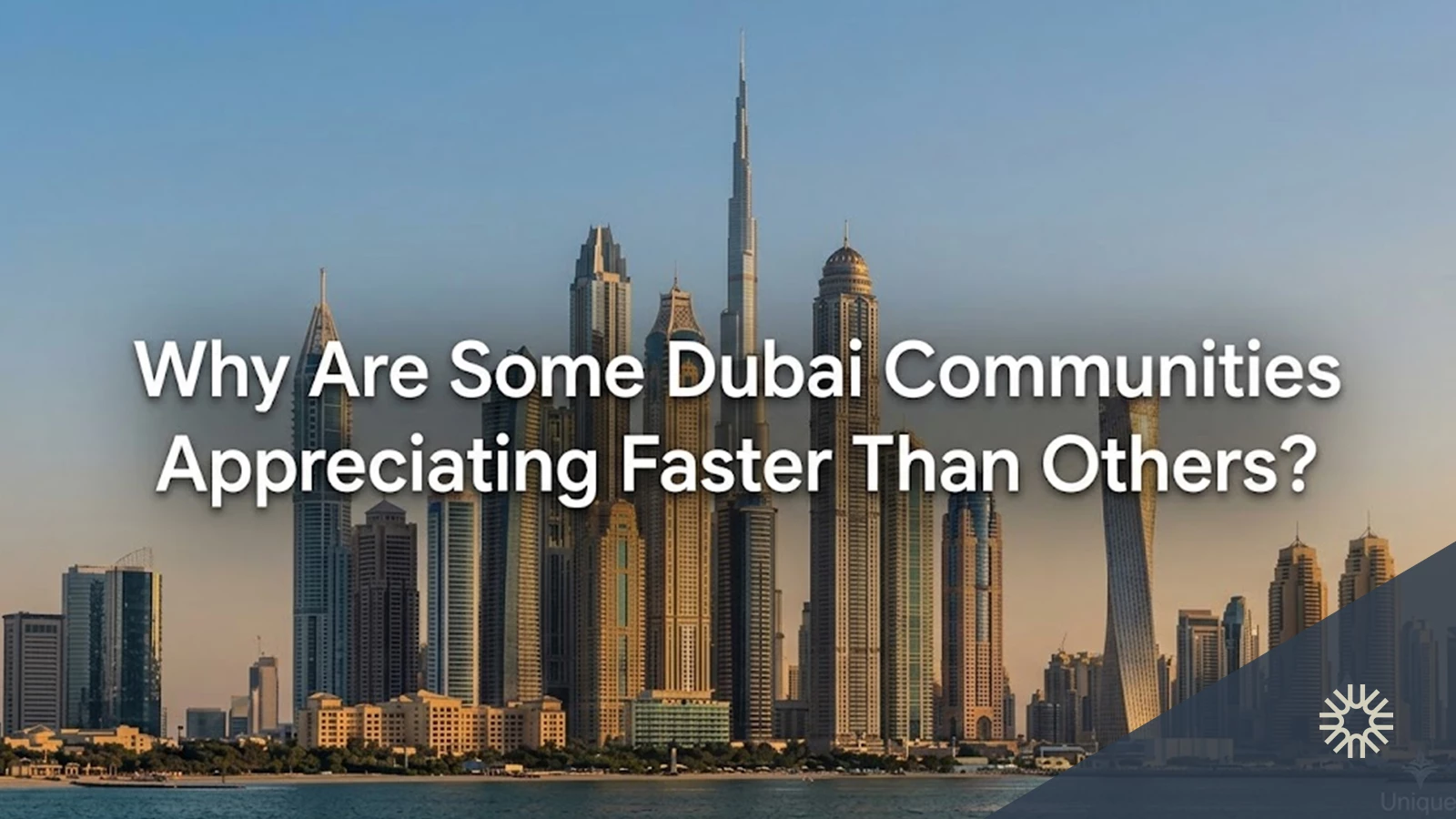
Why one Dubai neighborhood is outperforming another and you'll get ten different answers. A metro station. A school. A developer's name. All of it matters a little. None of it explains the full picture on its own.
At Unique Properties, we look at this question every day, because it's the one that actually decides whether a client makes money or just makes a purchase. And the honest answer, backed by what the Dubai Land Department (DLD) and Property Finder are both reporting right now, is that Dubai's market has stopped moving as one block. It's splitting into two very different stories.
The market isn't slowing down. It's sorting itself out.
For the first half of 2026, DLD recorded 79,281 residential sales worth AED 221.4 billion, down from 91,973 transactions worth AED 262.6 billion in the same period last year. On paper, that looks like a cooling market. It isn't, not really. Overall value stayed enormous, and what changed underneath it is more interesting than the headline number: buyers got pickier, and prices started behaving differently depending on exactly where you're standing.
That's the whole point of this post. Two apartments a fifteen-minute drive apart can be on completely different trajectories, and the reason usually comes down to scarcity, supply pipeline, and infrastructure, not marketing.
Scarcity still wins
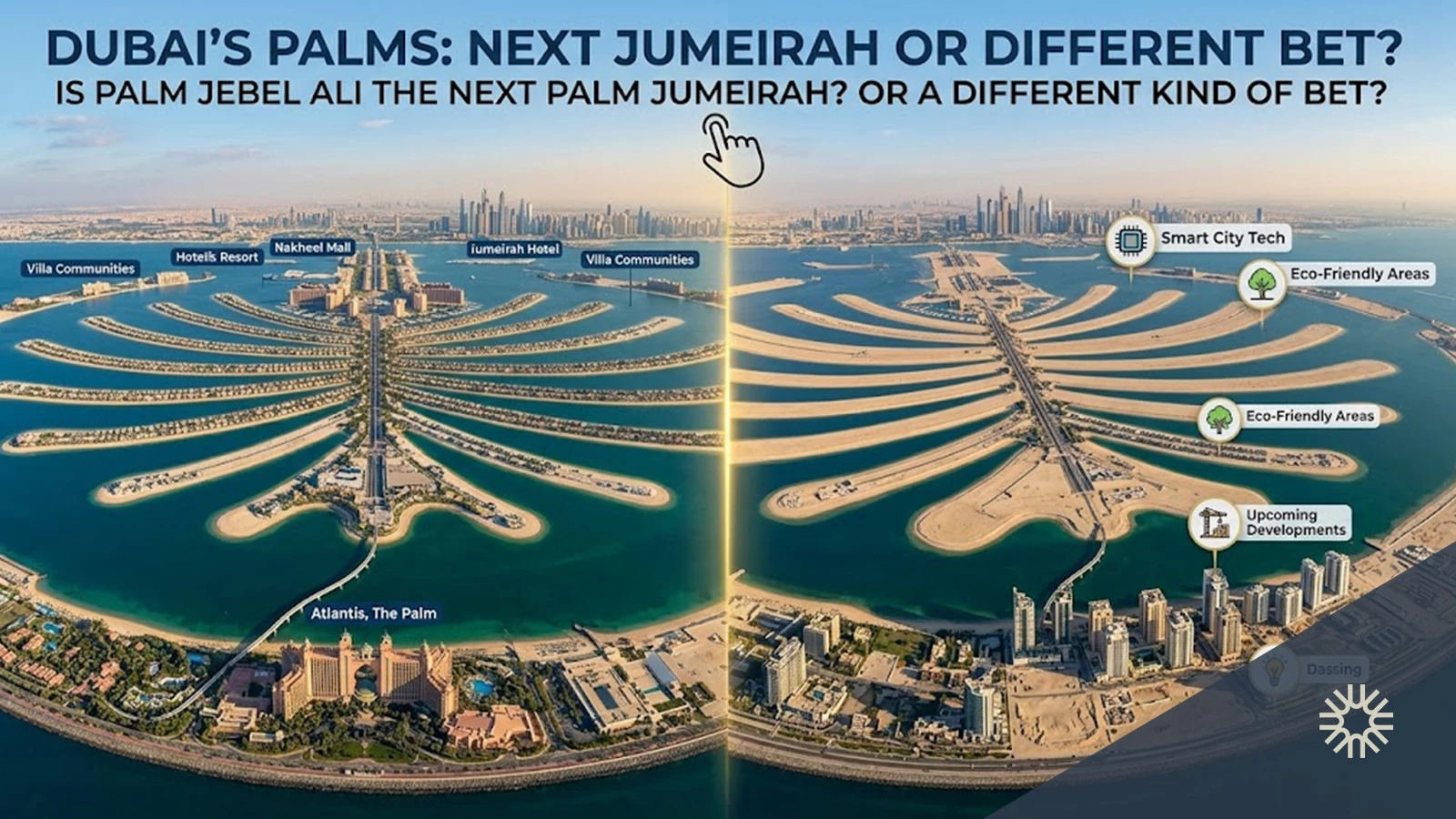
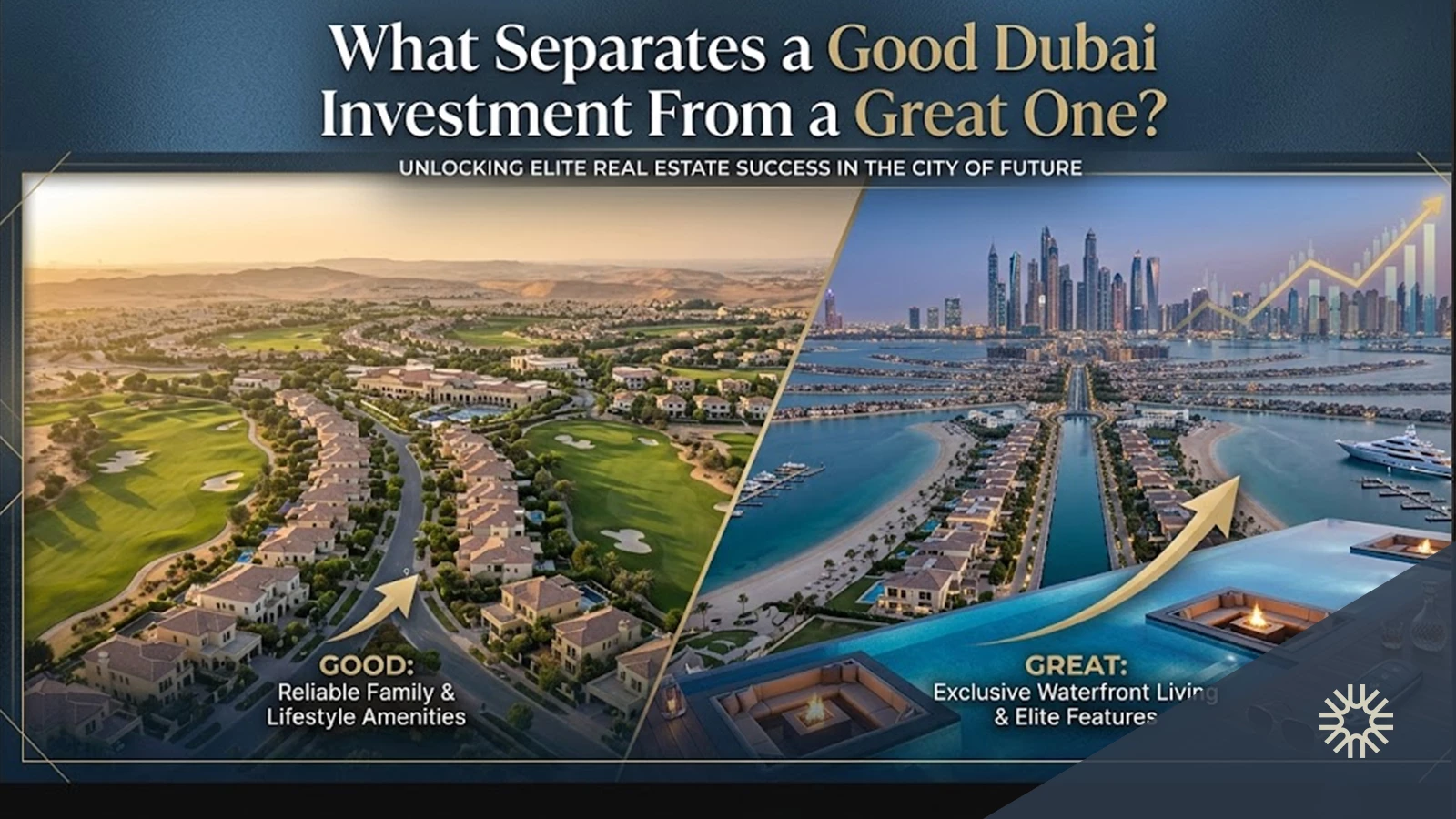
Communities where land is genuinely limited keep holding their value, even while other pockets of the market flatten out. Palm Jumeirah and Dubai Hills Estate are the clearest examples. Property Finder's own demand tracking shows both areas continuing to post pricing resilience heading into 2026, simply because there's no more Palm to build and Dubai Hills has a finite number of plots left.
Compare that to Jumeirah Village Circle, Business Bay, and Dubai South, three names that come up constantly with investors who ask us "why isn't my unit moving the way I expected." These communities carry heavier new-supply pipelines and, frankly, more competition from freshly launched projects nearby. That doesn't make them bad investments. It makes them different investments, ones where entry price and unit selection matter far more than they do in a scarcity-driven area.
The villa premium is real, and it's widening
If you want one number that sums up the last two years, it's this: average freehold villa values have risen 206% since the pandemic, compared to a much more moderate climb for apartments over the same stretch. Villas are still leading. Forecasts for 2026 put villa appreciation somewhere in the 6% to 10% range for the year, with prime pockets like Emirates Hills pushing toward the top of that band, while broader price growth across the city is expected to settle at a more modest 5% to 8%, down from the 12% to 22% swings we saw in 2024 and 2025.
Why the gap? Space. Buyers with families, especially those relocating for work, are consistently choosing room to breathe over proximity to a mall. And villa supply simply can't expand the way apartment towers can. You can announce another 40-storey building. You can't announce another Arabian Ranches.

Infrastructure is the quiet variable everyone underestimates
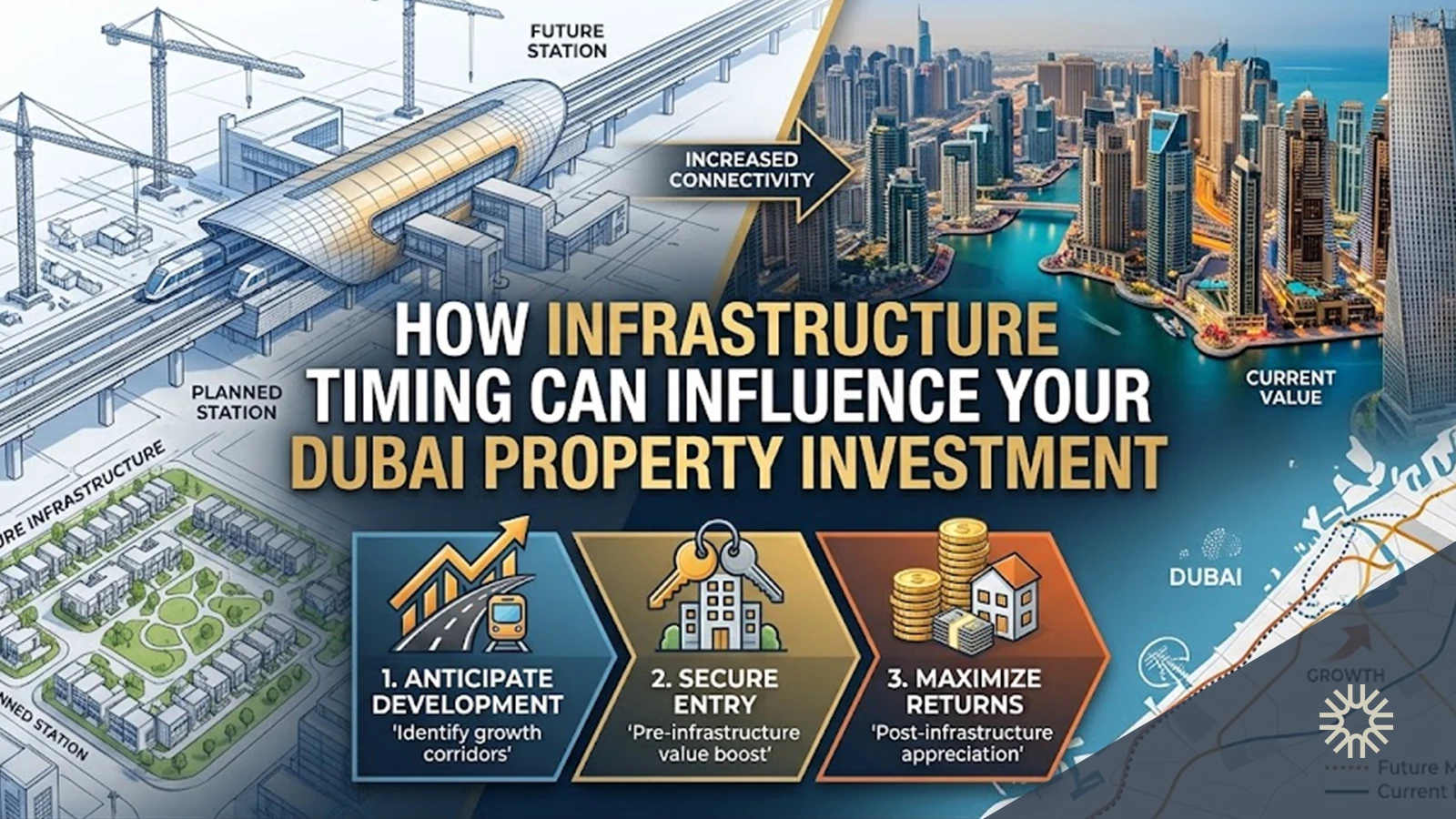
This is the part we spend the most time on with clients, because it's the least visible driver and often the most profitable one. The Roads and Transport Authority's upcoming Dubai Metro Blue Line is projected to lift property values by as much as 25% near its future stations once it opens in 2029. That's not a rounding error. That's a multi-year head start for anyone who buys before the line is running rather than after.
Nearer term, road upgrades along Hessa Street, the Umm Suqeim to Al Qudra corridor, and Latifa Bint Hamdan Street are expected to support demand for ready units in JVC, Al Barsha, Dubai Hills, Al Sufouh, and Business Bay through 2026, mainly by cutting commute times that currently push some buyers toward other areas. Properties within walking distance of an existing metro station already rent 10% to 15% faster than comparable units further away. Connectivity isn't a nice-to-have on a brochure. It's a measurable driver of both rental speed and long-term price growth.
Yield tells a different story than appreciation, and both matter
One thing we always flag to clients: the community with the fastest capital growth isn't always the one with the best yield, and confusing the two leads to bad decisions. Palm Jumeirah, for instance, delivers strong appreciation but a comparatively modest rental yield of around 4.7%. Meanwhile, more affordable communities like International City and Dubai Silicon Oasis are producing yields of 8.9% and 8.5% respectively, well above the citywide apartment average of roughly 7%. If your goal is monthly income, chasing the flashiest appreciation numbers can actually work against you.
So which communities should you actually be watching?
Based on what DLD's transaction data and Property Finder's demand indices are showing right now, our view at Unique Properties comes down to three groups worth paying attention to:
- Hold-and-grow scarcity plays: Palm Jumeirah, Dubai Hills Estate, Emirates Hills
- Infrastructure-timed opportunities: JVC, Al Barsha, Business Bay, Dubai South, ahead of near-term road and transit upgrades
- Yield-first income properties: International City, Dubai Silicon Oasis, and select JVC towers
None of these labels are permanent. A community can move from one category to another in eighteen months if a new station opens or a competing project floods the pipeline. That's exactly why "buy in Dubai" isn't a strategy on its own. Buying the right community, at the right stage of its own cycle, is.
Let's find the right one for you
Every one of the numbers above changes the math on a specific property, not just a neighborhood name. If you want to know where your budget actually fits, given what's happening in these communities right now, our team can walk you through it directly.
Find a Property that matches where the growth is heading, or Book a Consultation with a Unique Properties advisor to talk through your options before you commit.
Table Of Content
- The market isn't slowing down. It's sorting itself out.
- Scarcity still wins
- The villa premium is real, and it's widening
- Infrastructure is the quiet variable everyone underestimates
- Yield tells a different story than appreciation, and both matter
- So which communities should you actually be watching?
- Let's find the right one for you
- The market isn't slowing down. It's sorting itself out.
- Scarcity still wins
- The villa premium is real, and it's widening
- Infrastructure is the quiet variable everyone underestimates
- Yield tells a different story than appreciation, and both matter
- So which communities should you actually be watching?
- Let's find the right one for you