How Can Buyers Spot Dubai's Next High-Potential Community Before Everyone Else?
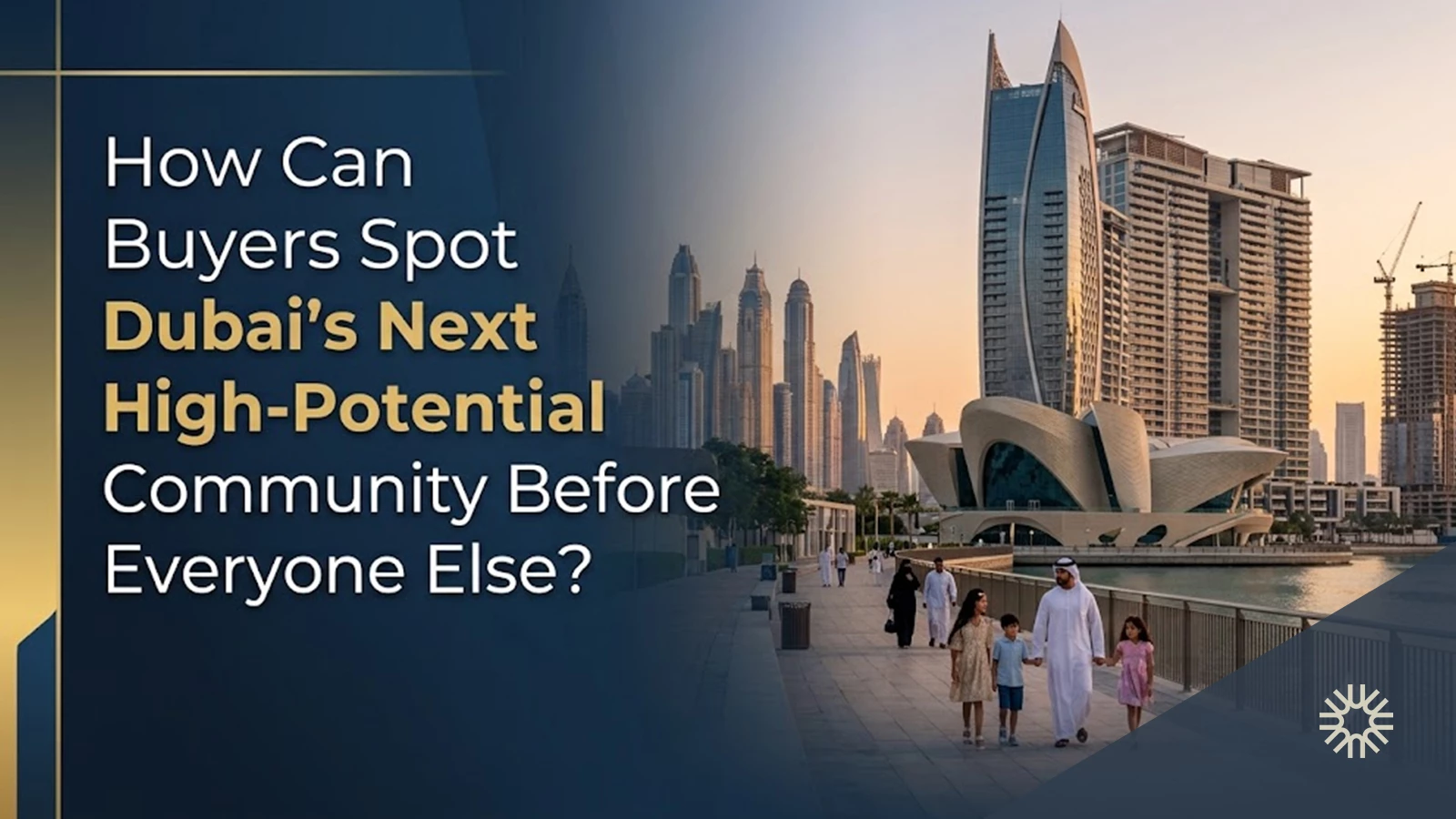
Every investor wants to have bought in Jumeirah Village Circle back when it was cheap, or picked up land in Dubai Hills before the golf course and schools made it fashionable. Nobody wants to buy after the growth has already happened. At Unique Properties, we hear some version of the same question almost every week: "Where's the next one?"
There's no crystal ball for this. But there is data, and if you know where to look, Dubai tells you where it's heading months before the price tags catch up.
The City Is Growing Faster Than Most Buyers Realize
Start with the basics, because they get skipped too often. Dubai's population passed 3.6 million in 2025, and it keeps climbing on the back of new visa categories and steady expatriate inflows. That single fact underpins almost everything else in this article: more people need somewhere to live, and they don't all want to live in the same three neighborhoods everyone already knows about.
A few numbers worth sitting with:
- Dubai's real estate transactions hit AED 252 billion in Q1 2026 alone, up 31% year-on-year, according to the Dubai Land Department.
- The investor base grew 8% in the same quarter, with more than 29,000 completely new investors entering the market.
- UAE-wide GDP growth is tracked at around 5% for 2026, with non-oil sectors, including real estate, doing most of the heavy lifting.
None of that tells you which community to buy in. What it tells you is that the money is real, it's growing, and it has to land somewhere.
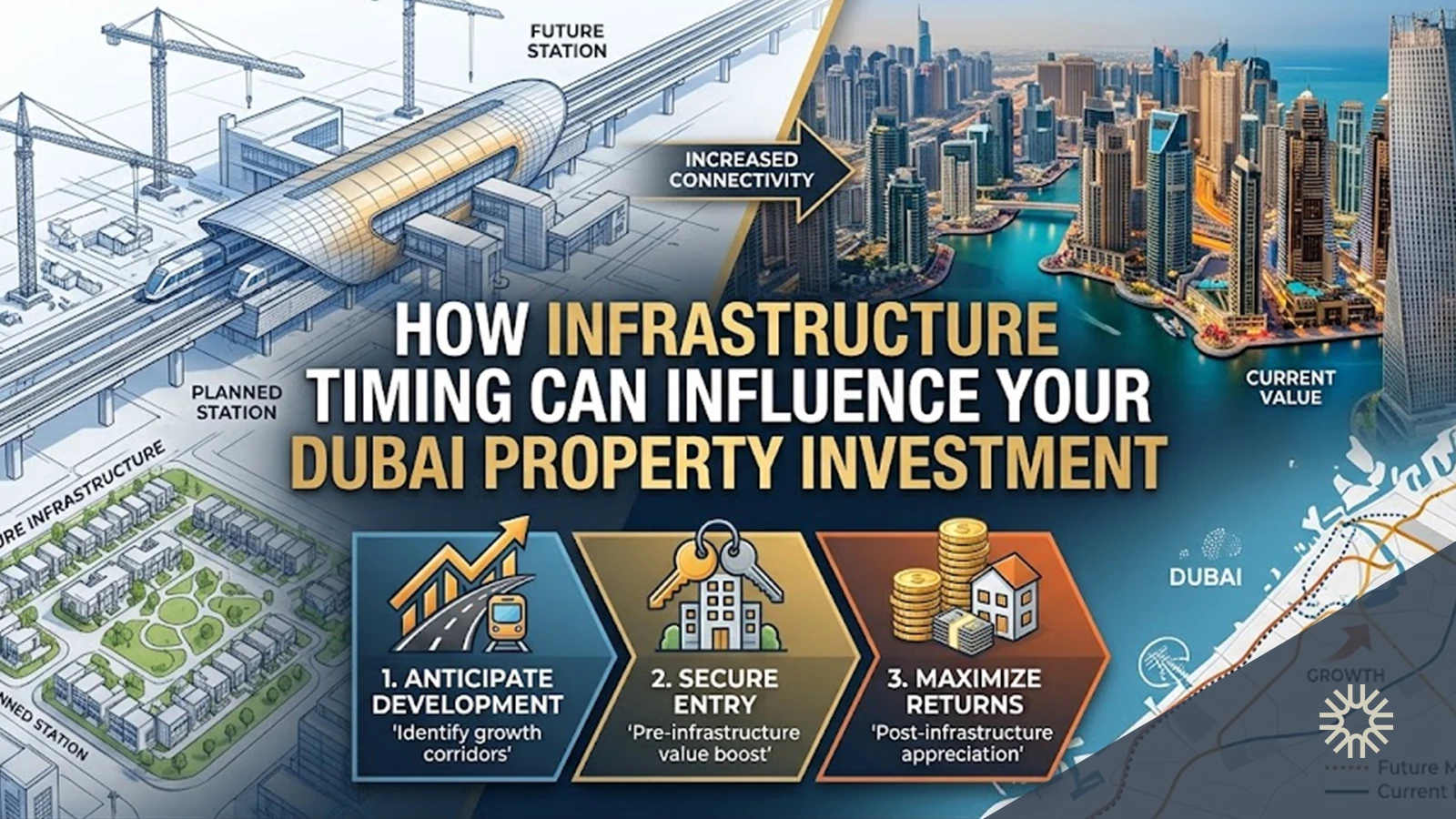
Follow the Infrastructure Money, Not the Marketing
If we had to pick one signal that beats all the others, it's this: where is government capital actually being spent, right now, not promised for someday?
The clearest example in Dubai today is the Al Maktoum International Airport expansion, budgeted at roughly AED128 billion. It's designed to eventually handle 260 million passengers a year, and the construction phase alone is projected to add close to AED6.1 billion to Dubai's GDP by 2030 while supporting an estimated 132,000 jobs. That kind of spending doesn't stay contained to an airport footprint. It pulls housing, retail, and logistics demand out toward Dubai South, Emaar South, and the wider Jebel Ali corridor.
We're also watching the rail story closely:
- Etihad Rail is already moving freight across all seven emirates, with passenger services planned to follow.
- Dubai's new Gold Line, a fully underground 42km metro line with 18 stations, was greenlit at a cost of Dh 34 billion, targeting a 2032 opening.
- Homes within walking distance of confirmed future rail and metro stops are being forecast to appreciate 20% to 30% faster than comparable stock elsewhere, simply because the commute math changes once a station opens.
This is the pattern we look for again and again: transport infrastructure arrives first, jobs and residents follow, and prices catch up last. If you can identify a community sitting inside that pipeline before the station is finished, you're not speculating. You're reading a construction schedule.

What's Already Showing Up in the Numbers
Some of this shift has already started. Rents in Dubai Investment Park and Dubai South climbed roughly 20% over the past twelve months, largely driven by relocating airport and airline staff who need to live within a short commute of the new hub. That's not a forecast. That's happening now, which is exactly why we tell clients to stop thinking of Dubai South as "emerging" and start thinking of it as "mid-cycle."
A few other things worth checking before you commit to any community:
- Transaction velocity. A sudden jump in monthly sales volume, not just value, in one specific area usually shows up before the price does. Watch for it.
- Rental yield relative to entry price. Mid-market communities are currently posting yields in the 7-10% range, noticeably higher than premium waterfront addresses. High yield on a low entry price is the classic setup that precedes a capital appreciation cycle.
- Confirmed versus proposed infrastructure. A metro extension under construction is a different asset than a metro extension mentioned in a masterplan brochure. Only one of them reliably moves prices.
- Population-driven demand, not tourism-driven demand. Communities absorbing new residents (staff relocations, family housing, school catchments) tend to hold value better through market cycles than communities built mainly around short-stay visitors.
A Word on Supply
One mistake we see constantly: buyers treat any community with a large new-project pipeline as automatically risky, and any community with limited new supply as automatically safe. Neither assumption holds up on its own. A heavy pipeline paired with strong population inflow and funded infrastructure is healthy growth. A heavy pipeline paired with weak underlying demand is oversupply. The only way to tell the difference is to check whether people are actually moving into the area for jobs, schools, or transport access, not just whether developers are building there.
What We Tell Our Clients
Spotting a high-potential community isn't instinct, and it isn't a tip from someone who "knows someone." It comes down to three things we check every time:
- Is government or developer capital being spent there right now, not just announced?
- Is transaction volume accelerating faster than the city-wide average?
- Is rental yield outpacing entry price in a way that still leaves room for capital growth?
Southern Dubai currently ticks all three boxes. So do a handful of pockets near the newer rail corridors that haven't fully re-rated yet. The data is public. The advantage belongs to whoever reads it first.
If you'd like our team to walk you through which communities currently fit this profile, based on live transaction data rather than guesswork, we're ready to talk it through with you.
View Properties across Dubai's emerging and established communities, or Book a Consultation with a Unique Properties advisor to get a shortlist built around your budget and goals.