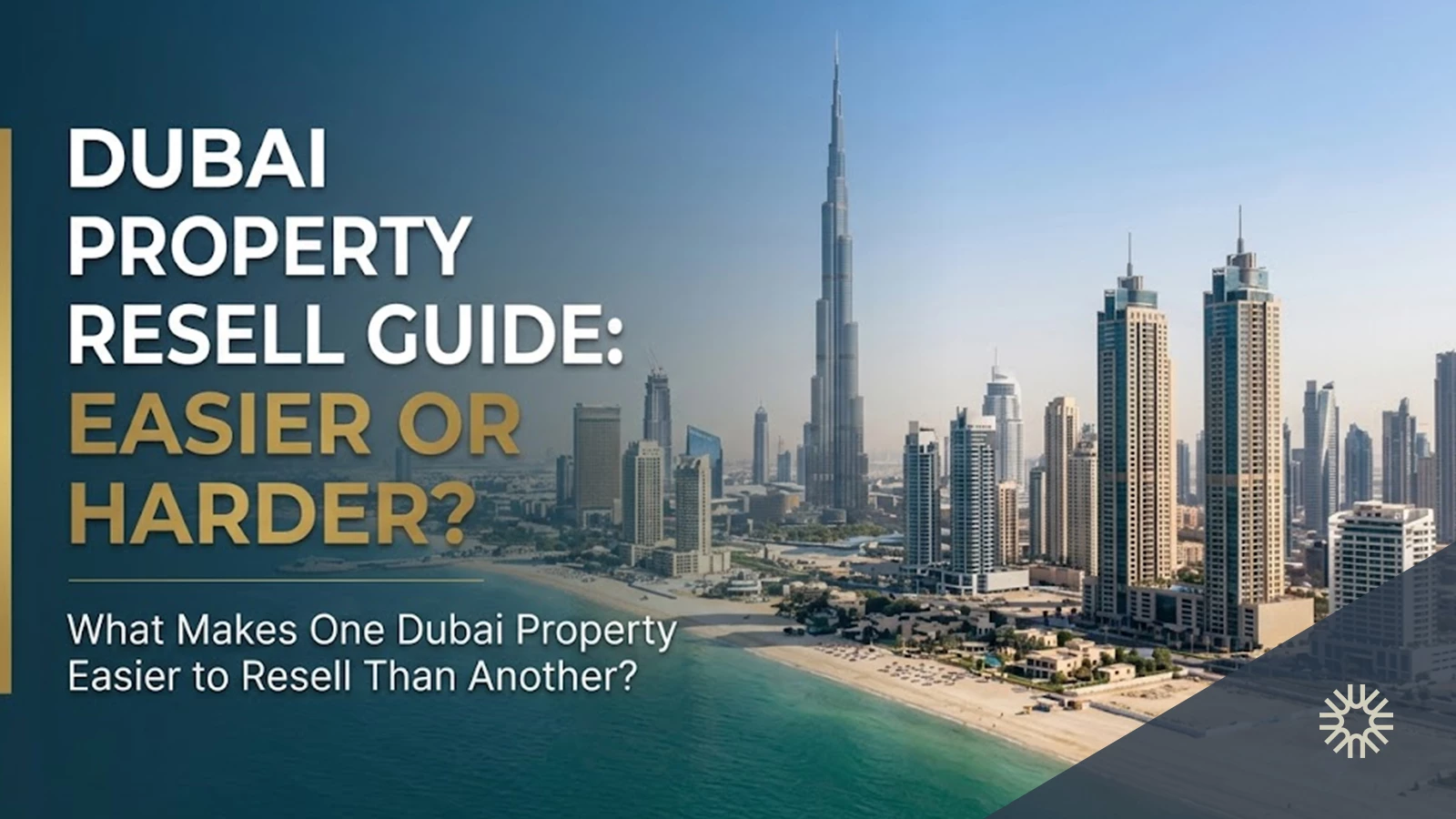
What Makes One Dubai Property Easier to Resell Than Another?
Every seller thinks their apartment is the easy one. Then it sits on the market for four months while the identical unit two floors down closes in three weeks. We see this pattern constantly at Unique Properties, and it rarely comes down to luck. It comes down to a handful of factors buyers weigh whether they say so out loud or not.
Dubai's resale market is busy right now. The Dubai Land Department recorded 86,005 transactions worth AED 286.4 billion across the first half of 2026, and foreign investment alone reached AED 148.35 billion in Q1, up 26% year on year. That is a lot of buyers actively shopping. But volume like that also means competition. When 60,000-plus transactions happen in a single quarter, your unit isn't competing against nothing. It's competing against every comparable listing in your building and the three buildings around it.
So what actually separates a property that moves fast from one that lingers? Here's what we watch for.
Location Still Does Most of the Heavy Lifting
This isn't a fresh insight, but the numbers back it up more sharply than people expect. Average sale rates across most Dubai communities sit between AED 1,100 and AED 1,400 per square foot. In Palm Jumeirah, Downtown, and Dubai Marina, that figure regularly clears AED 2,000. The gap isn't just about prestige. It reflects genuine, structural demand: proximity to metro lines, walkability to retail and dining, and a tenant pool that renews leases without a fight.
A well-built unit in a weak location will always take longer to sell than an average unit in a strong one. We've watched sellers spend on upgrades and finishes trying to compensate for a location problem, and it rarely closes the gap the way they hope.
Developer Track Record Matters More After Handover Than Before
Buyers researching off-plan projects pay attention to delivery timelines and payment plans. Buyers researching resale properties pay attention to something different: how the building has aged. Is the façade maintained? Are service charges reasonable? Has the developer kept up with common area upkeep three or five years after handover?
This is where reputation compounds. A developer known for consistent post-handover management makes every unit in every one of their buildings easier to resell, years later, regardless of who currently owns it. When you're evaluating a purchase for future resale value, ask less about the launch and more about buildings that the developer completed five-plus years ago. That track record tells you more than any brochure.

Ready vs Off-Plan Changes the Buyer Pool Entirely
Ready homes and off-plan units don't compete for the same buyer. Someone who wants rental income starting immediately, or who needs mortgage financing (which banks extend far more easily against completed properties), is shopping in the ready market specifically. That buyer isn't comparing your resale unit to a project handing over in 2028. They're comparing it to other ready stock.
This matters for sellers because it narrows your actual competition. It also means ready units in established communities tend to move faster during periods when the off-plan pipeline is heavy, since Dubai still has more than 100,000 additional units scheduled for handover through the rest of 2026. Buyers who want certainty now, rather than a promise for later, gravitate toward what's already built.
Layout Efficiency Beats Total Size
We ask this on nearly every valuation call: is the square footage doing useful work, or is it padding a number on a floor plan? A 950 sq ft two-bedroom with a sensible layout, real storage, and a balcony that's actually usable will often outsell a 1,100 sq ft unit with an awkward hallway eating up 15% of the space. Buyers notice this in viewings even when they can't articulate why one unit felt right and the other didn't.
If you're buying with resale in mind, favor efficient over large. If you're selling, and your layout has quirks, staging and clear floor plans in your listing do more work than people assume.
Price It Against Reality, Not Ambition
This is the factor sellers control most directly, and the one they resist most. Property Finder's search data consistently shows that overpriced listings get views but not offers, and the gap between asking price and eventual sale price widens the longer a unit sits. A property priced accurately against genuine recent comparable in the same building or cluster typically draws serious inquiries within the first two to three weeks. One priced 8 to 10% above the market usually needs a correction eventually anyway, just after months of sitting stale online, which buyers notice and use as leverage.
The market has the data to price correctly from day one. Using it upfront, rather than testing a high number first, tends to produce a faster sale at a better net price.
Putting This Together
None of these factors work in isolation. A well-located unit from a reputable developer with an efficient layout, priced honestly, is the profile that moves in weeks rather than months in a market moving AED 286 billion worth of transactions every six months. If your current property is missing one or two of these, that doesn't mean it won't sell. It means the strategy around it needs to account for what's working against you.
At Unique Properties, we walk sellers through exactly where their listing sits against current comparable before it goes live, not after it's been sitting for two months. If you're weighing whether to sell now or wait, or want a straight read on what your property would actually fetch in today's market, book a consultation with our team. And if you're on the buying side and want to see what's currently available with strong resale fundamentals already built in, view our properties to start browsing.