Etihad Rail Is Coming: How the UAE's Rail Network Could Increase Property Values Across Dubai and Beyond
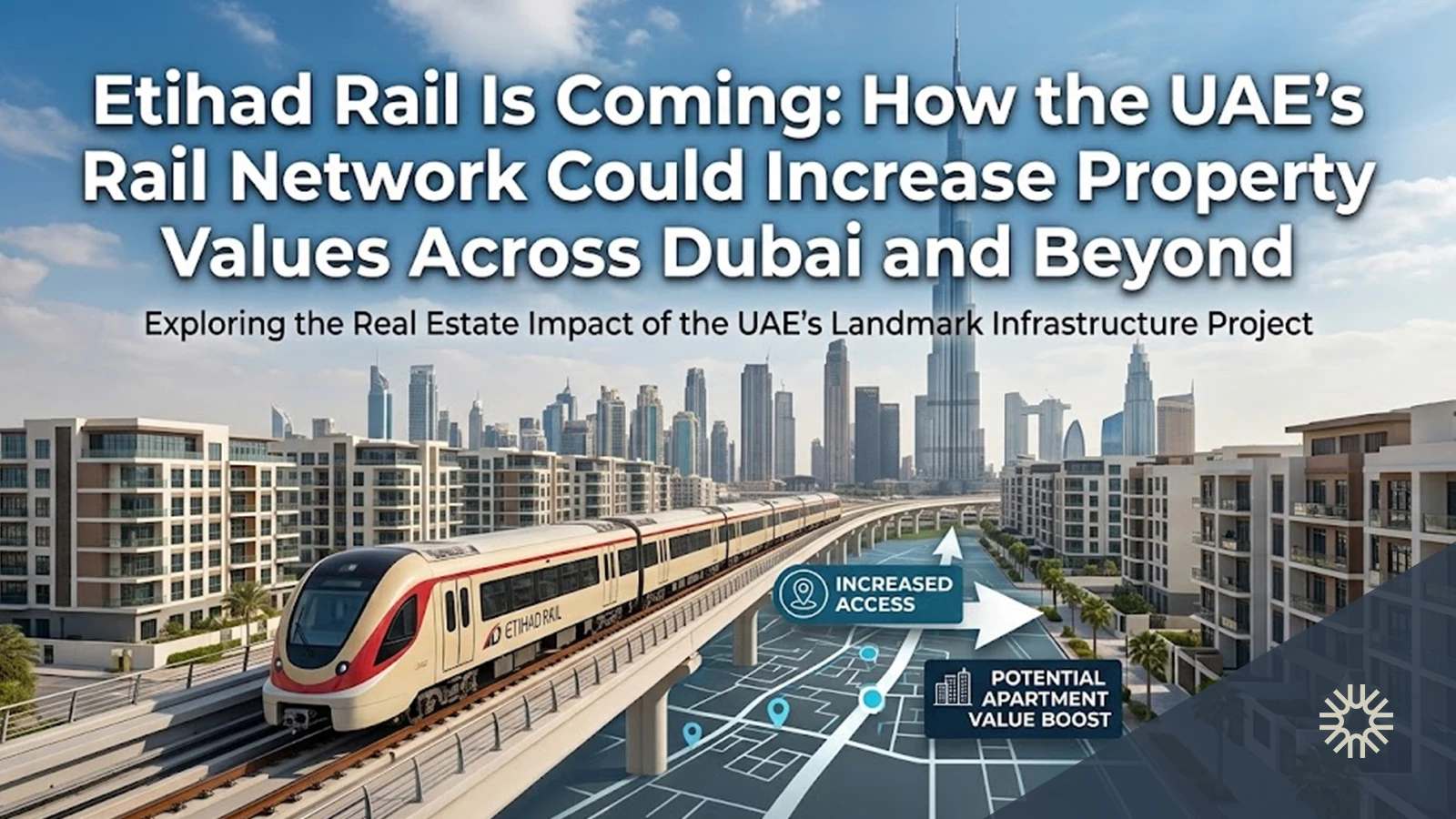
For years, Dubai's growth story has followed a simple pattern: infrastructure arrives, and property values follow. The Metro Red Line did it. The Water Canal did it. Now Etihad Rail is set to do it again, this time on a national scale.
The UAE's first passenger rail network began running between Abu Dhabi and Fujairah on June 30, 2026. Dubai's own station, at Jumeirah Golf Estates, opens on September 30, 2026, with Al Dhafra following in December and Sharjah completing the network in March 2027. Once fully operational, the line will connect 11 cities and regions across the country over 900 kilometers of track, at speeds of up to 200 km/h. An Abu Dhabi to Dubai trip will take 57 minutes. Abu Dhabi to Fujairah takes about an hour and 45 minutes.
At Unique Properties, we have watched enough transport announcements reshape neighborhoods to know what usually happens next. We wanted to break down, in plain numbers, what this rail network could mean for property values in Dubai and the communities that will eventually sit along its route.
Why Rail Access Moves Property Prices
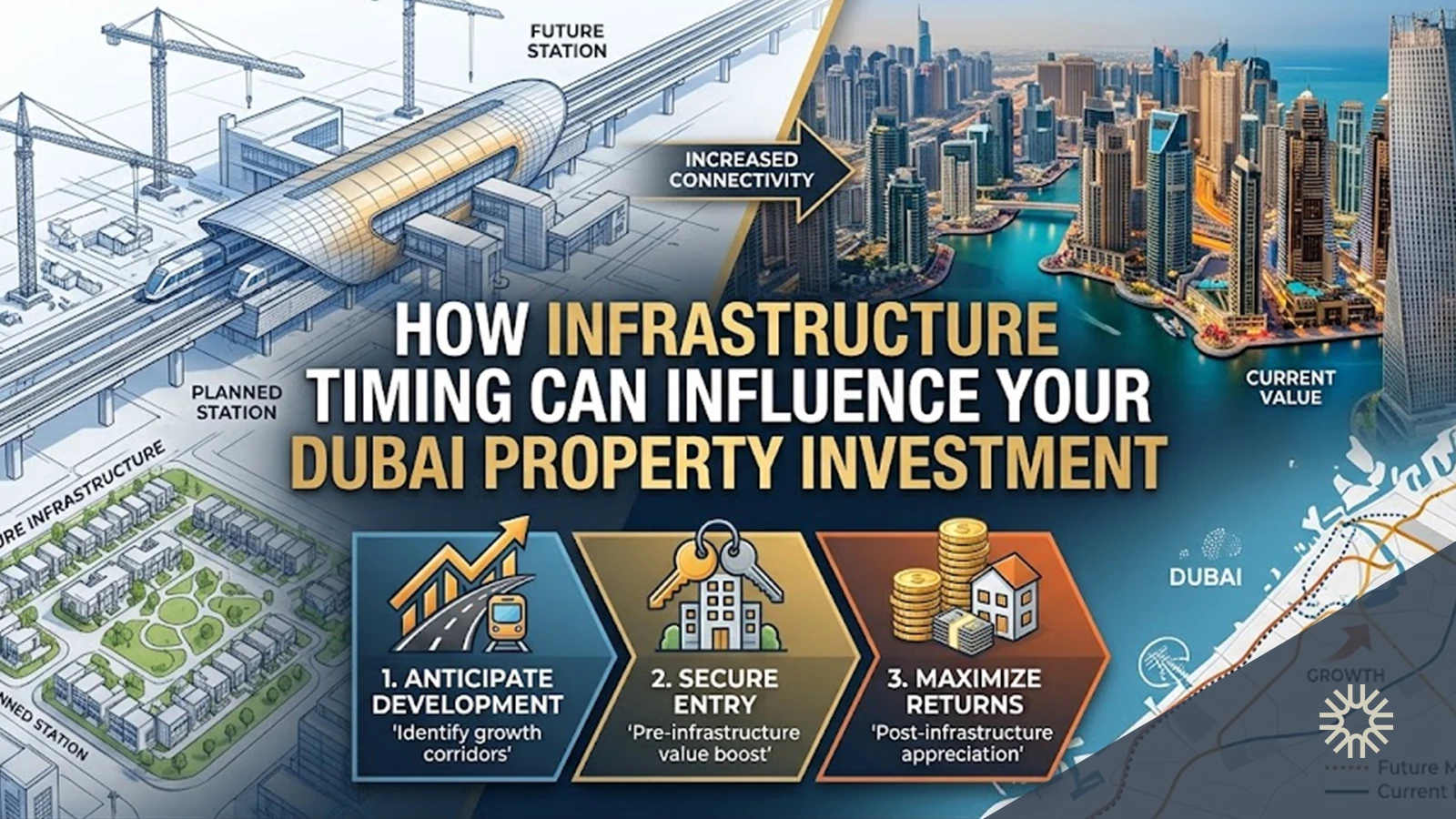
Dubai's own transaction history makes the pattern easy to see. Homes within 500 meters of an existing metro station have historically appreciated by 22 to 30 percent more than comparable properties further away, and much of that value shows up before the station even opens. Buyers price in future convenience long before they experience it.
Rental data tells a similar story. Properties within walking distance of transit typically rent 10 to 15 percent faster than similar units farther out, according to trends we track through Dubai Land Department transaction records and Property Finder listing activity. Faster leasing means fewer vacant months, and fewer vacant months mean stronger long-term returns for owners. That is the real mechanism behind the price premium: it is not sentiment, it is occupancy.
We saw the same thing play out when the Gold Line was announced for Jumeirah Village Circle, MBR City, and Meydan earlier this year. Communities that had relied purely on road access suddenly had a rail future, and land values in those corridors started moving well ahead of any construction crews showing up.
What Makes Etihad Rail Different
The Dubai Metro reshaped how people move within the city. Etihad Rail reshapes how people move between cities, and that is a different kind of value driver.
Consider Jumeirah Golf Estates, the site of Dubai's only Etihad Rail station. It already sits along Sheikh Mohammed Bin Zayed Road, and its station connects into the Dubai Metro network, putting Green Community, Al Furjan, Dubai Investment Park, and Expo City Dubai within a short reach of a national rail line. A resident there will eventually be able to reach Abu Dhabi in under an hour without touching a highway. That is not a lifestyle upgrade anyone was expecting from a golf community five years ago.

The same logic applies at a national level. Areas near Al Maktoum International Airport and Dubai South already benefit from land affordability and infrastructure investment, and a rail link into that corridor adds another layer of long-term demand. We are also watching how the planned high-speed line between Abu Dhabi and Dubai, expected to cut that journey to just 30 minutes once it opens around 2030, will eventually blur the line between the two emirates as separate housing markets altogether.
The Numbers Investors Should Watch
A few figures are worth holding onto if you are weighing a purchase near the rail corridor:
- 900 km of Etihad Rail track connecting 11 UAE cities and regions once the full network is live.
- 57 minutes between Abu Dhabi and Dubai on the new passenger service, dropping to roughly 30 minutes once the high-speed line opens.
- 20 to 30 percent historical price premium for properties near established Dubai transit stations, based on patterns from prior metro expansions.
- 10 to 15 percent faster leasing for transit-adjacent units, which directly supports rental yield and resale liquidity.
- 36.5 million passengers Etihad Rail expects to carry annually once the passenger network matures.
None of these numbers guarantee a specific return on any single property. What they do show is a consistent relationship, visible across multiple Dubai infrastructure cycles, between transit access and both faster leasing and stronger appreciation. Etihad Rail is the largest transport project the UAE has built to date, and it is reasonable to expect its effects to reach beyond the immediate station neighborhoods into the wider communities they feed into.
Our Take at Unique Properties
We do not think Etihad Rail turns every nearby community into an overnight investment story. Rail access matters most when it is paired with genuine housing demand, and not every station will sit next to a neighborhood people actually want to live in. That distinction is exactly where local expertise earns its keep.
What we are advising clients right now is to treat this the way Dubai's own market has treated every prior infrastructure cycle: get informed early, understand which communities the station genuinely improves, and move before the broader market catches up to the same conclusion. Waiting until a station is fully operational usually means paying the premium other buyers already priced in.
If you are considering a purchase in Jumeirah Golf Estates, the wider Dubai South corridor, or any community that stands to gain from improved connectivity to Abu Dhabi and the Northern Emirates, our team can walk you through the data on a property-by-property basis. Explore our current listings on our Find a Property page, or reach out directly to book a consultation with one of our advisors.
Infrastructure like this does not arrive often. When it does, the buyers who understand the numbers early are usually the ones who benefit most.