Why Micro-Markets Are Becoming Dubai's Biggest Real Estate Opportunity

For years, "Dubai real estate" was treated as one story. One growth rate, one price trend, one headline number. That story is over.
Walk through the data with us for a minute. Dubai closed the first half of 2026 with 86,005 real estate transactions worth AED 286.43 billion. That's a city-wide figure, and it's impressive on its own. But it hides the more useful truth: Dubai isn't one market anymore. It's a collection of dozens of micro-markets, each moving on its own timeline, driven by its own supply pipeline, its own buyer profile, and its own infrastructure story.
At Unique Properties, this is the shift we've been tracking closely with our clients, and it's the reason "buy in Dubai" is no longer good enough advice. The better question is: buy in which Dubai?
The city-wide number was never the whole picture
Look at price growth over the past six months. Citywide, growth cooled from close to 12% year-on-year in January to under 4% by May. If that's all you saw, you might assume the market is losing momentum across the board.
It isn't. Dubai Silicon Oasis posted a 29% jump in price per square foot last year on the back of Blue Line Metro news. Arjan, Dubai South, and DAMAC Hills 2 saw gains of 9-25% as new inventory pulled in first-time buyers. Meanwhile, Business Bay and JVC are sitting in a very different position: oversupplied, softening, and increasingly buyer-friendly on price and payment terms.
Three neighborhoods, three completely different investment cases, all inside the same city, all in the same reporting period. That's the definition of a micro-market economy, and it's exactly why blanket market commentary from other sources tends to mislead more than it helps.
Scarcity is quietly becoming the strongest asset class
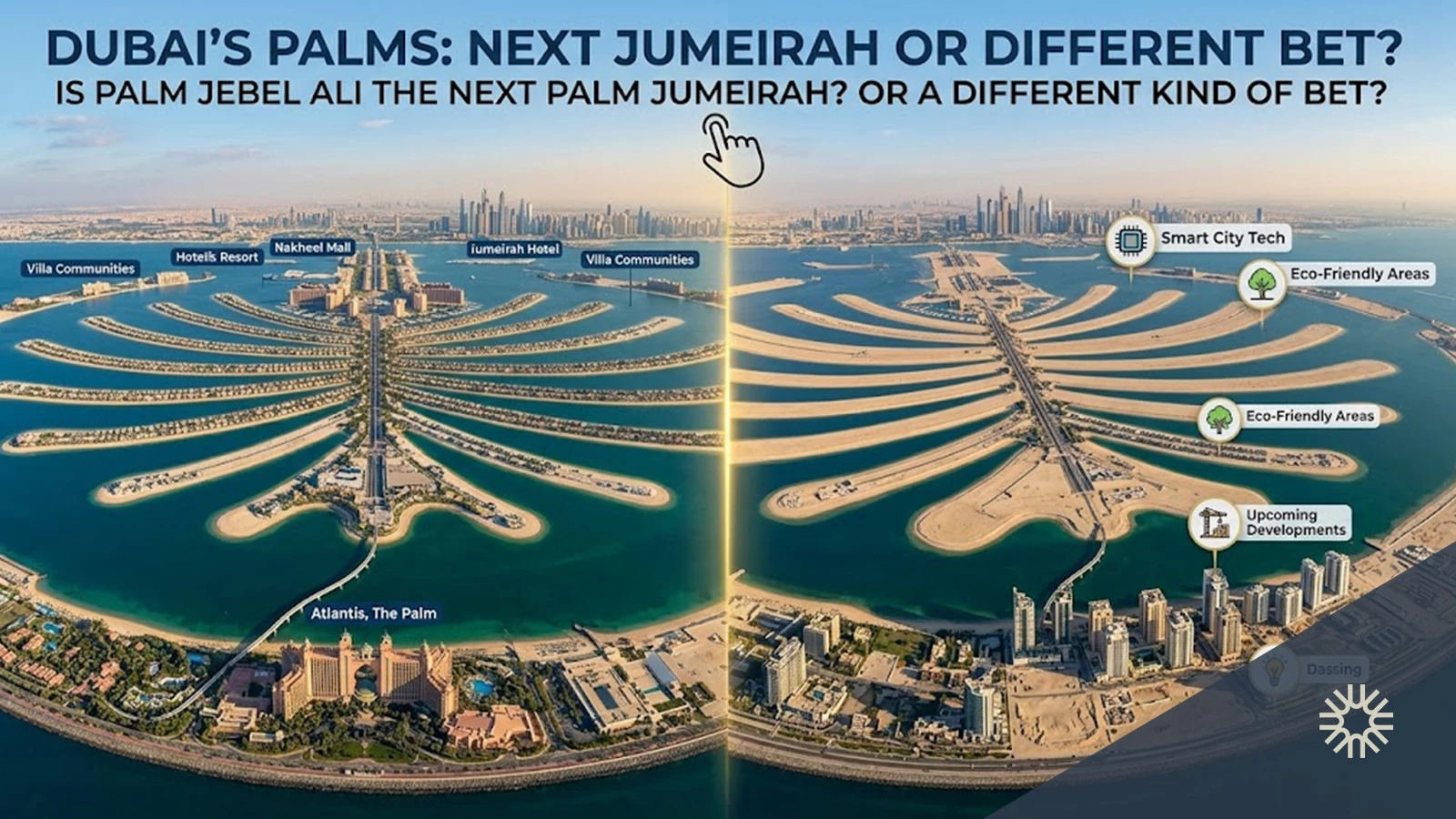
One pattern stands out in this year's data more than any other: where supply is genuinely limited, prices are holding, even while the broader market takes a breather. Palm Jumeirah is the clearest case study. Apartments there averaged AED 3,511 per square foot in the first quarter, nearly double the citywide average, while villas averaged AED 6,428 per square foot against a citywide villa figure of AED 2,376.
Dubai Hills Estate tells a similar story, alongside Emirates Hills and Jumeirah Islands, where limited land and constrained future supply are acting as a genuine price floor. Buyers in these communities aren't chasing a headline yield. They're paying for scarcity that Dubai, as a rule, doesn't manufacture more of.
Contrast that with the high-supply corridor: JVC, Business Bay, Dubai Land, Dubai South, and Arjan. These communities are absorbing repeated launch cycles and a heavy handover schedule through the second half of 2026, which is translating into flatter pricing and considerably more negotiating room for buyers who know how to read that as opportunity rather than weakness.

Where the real upside is sitting right now
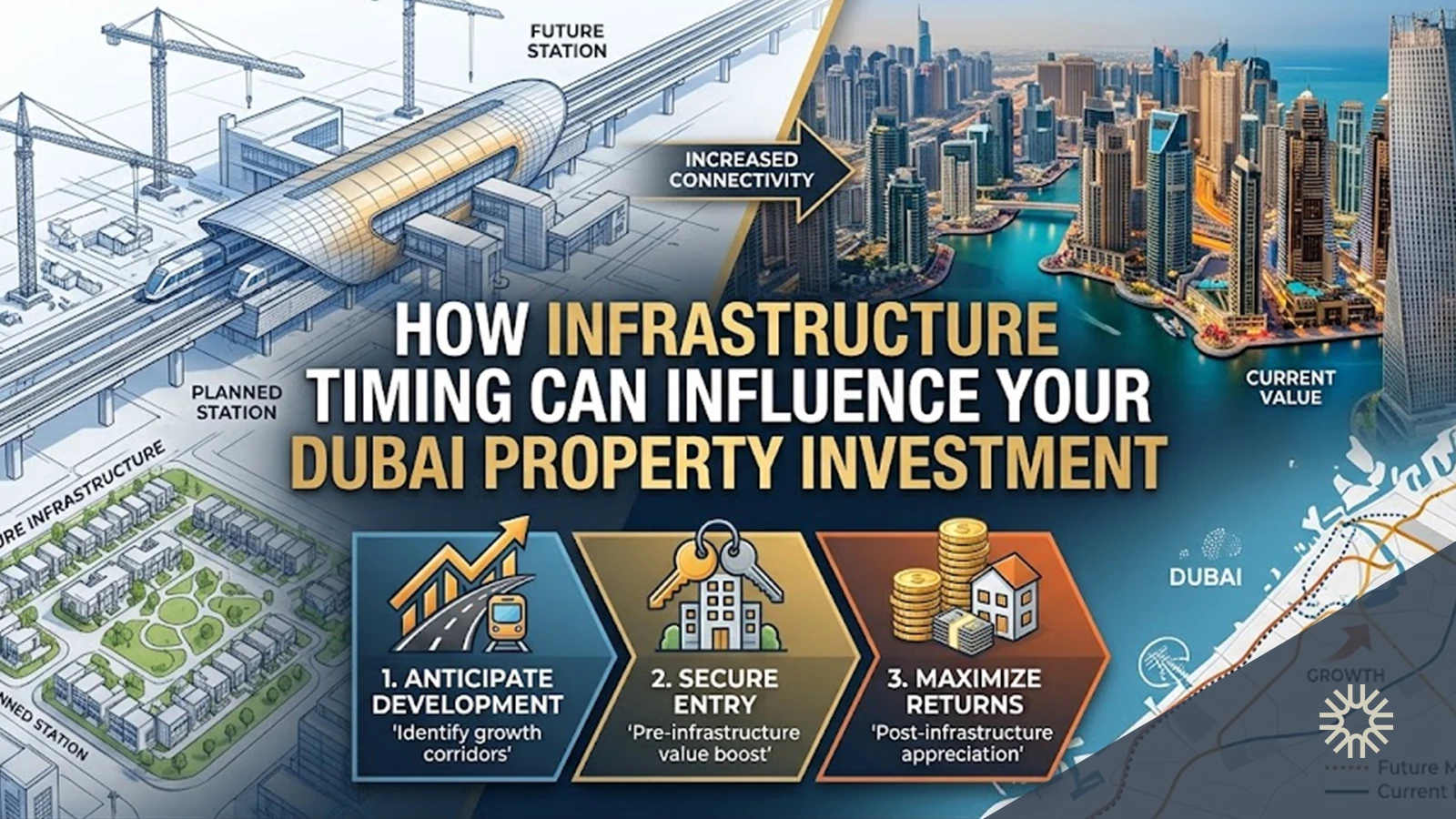
If scarcity is one micro-market thesis, infrastructure is the other, and it's the one we think is currently underpriced.
Road upgrades along the Hessa Street and Umm Suqeim-Al Qudra corridor are already lifting ready-home demand in JVC, Al Barsha, Dubai Hills, and Business Bay through simple, practical means: shorter commutes. The bigger story is the Blue Metro Line, due from 2029, which is already reshaping buyer intent along its corridor, including Dubai Silicon Oasis, International City, Al Warqa'a, Mirdif, and Academic City. Dubai has done this before. When the Red Line opened in 2009, properties within 500 meters of a station saw a 12% price premium within two years, and JLT went from overlooked to one of the city's most sought-after addresses in a similarly short window.
Dubai South carries its own version of that thesis. Positioned near Al Maktoum International Airport and inside the Dubai 2040 master plan's designated future urban center, it's currently one of the more affordable entry points in the city, with studios still available under AED 500,000 in select projects. That combination, low entry price plus a defined, funded infrastructure catalyst, is what a genuine early-stage micro-market opportunity looks like, rather than a marketing label attached after the fact.
What this means if you're deciding where to put your capital
None of this is a case against Dubai. Off-plan sales still made up 72% of residential transactions in the first quarter of the year, foreign investment value climbed 26% year-on-year to AED 148.35 billion, and the investor base grew 8% to reach 48,448 active investors. The appetite for Dubai property remains firmly intact.
What's changed is the level at which decisions need to be made. A citywide average tells you almost nothing useful about whether a specific building, in a specific community, at a specific stage of its supply cycle, is a smart entry point today. That answer only comes from community-level data, read against your own goals: capital growth, rental yield, end-use, or long-term hold.
That's the layer where we spend most of our time with clients at Unique Properties. Not repeating the headline number, but working out which micro-market actually fits what you're trying to achieve, and when the timing inside that micro-market makes sense.
If you're weighing up scarcity plays like Dubai Hills Estate against infrastructure plays like Dubai South or Silicon Oasis, or you simply want a straight answer on where your budget goes furthest right now, browse our current listings to see what's live across these communities today, or book a consultation with our team and we'll map the right micro-market to your goals directly.