Dubai's Next Five Growth Corridors: Where Smart Investors Are Looking Before 2030
We read the Dubai Land Department's transaction sheets the way other people read the morning news. It's a habit at Unique Properties not because the headline numbers aren't impressive (Dubai closed 2025 with roughly AED 686.8 billion in property sales across 215,736 transactions, a jump of nearly 31% in value year-on-year), but because the real story sits one layer beneath them. It's where that capital is moving.
For years, "Dubai real estate" meant four postcodes: Marina, Downtown, Palm Jumeirah, Business Bay. Those areas still anchor the market Dubai Marina alone generated AED 25.1 billion in transaction value in H1 2025. But the next decade of growth is being written somewhere else: along five corridors being reshaped by airport expansion, metro construction, and the Dubai 2040 Urban Master Plan.
Here's where we're telling our clients to look.
1. Dubai South & Al Maktoum International — The Aerotropolis
This is the corridor we watch most closely. Dubai's leadership has approved a AED 128 billion expansion of Al Maktoum International Airport, designed to lift capacity from today's levels to 150 million passengers within a decade, and eventually 260 million passengers and 12 million tonnes of cargo a year five times the scale of Dubai International. Just weeks ago, Sheikh Hamdan confirmed a further AED 55 billion in contracts is about to be awarded as the build-out enters a heavier construction phase.
Emirates isn't waiting for the ribbon-cutting. The airline broke ground on a $5.1 billion engineering hub at Dubai South this year, paired with new crew housing for 12,000 employees built in partnership with Dubai Investments Park. The 2040 master plan designates the entire 145 sq km Dubai South district as a future urban center, and our read is simple: when an airline commits billions before a single commercial flight has shifted hangars, the surrounding land isn't speculative anymore it's foundational.
2. Mohammed Bin Rashid City — The New Centre of Gravity
MBR City doesn't get the headlines Downtown does, but the numbers tell their own story. It recorded AED 14.5 billion in transaction value in H1 2025 alone, placing it among Dubai's ten highest-value areas ahead of several long-established communities. What's driving it is less about hype and more about maturity: new schools, retail anchors, and transport links coming online have turned a once-peripheral masterplan into a genuine alternative to Downtown for end-users, not just investors flipping paper.
We see MBR City, and pockets like Sobha Hartland II within it, increasingly mentioned alongside Palm Jumeirah and Dubai Hills Estate in the "prime and waterfront" category areas generating a higher share of value relative to transaction volume, which is market language for "buyers are paying up for quality here."
3. Dubai Creek Harbour — Already Wired Into Tomorrow's Network
Creek Harbour earns its place on this list twice over. First, on fundamentals: Emaar delivered 1,919 units there in 2025 the fourth-highest completion count of any Dubai community while capital growth has averaged 9–14% annually since 2022 as the waterfront promenade and retail layer matures. Resale activity now accounts for over 80% of transaction value in the district, a sign that this is no longer a purely off-plan story; long-term holders are buying in.
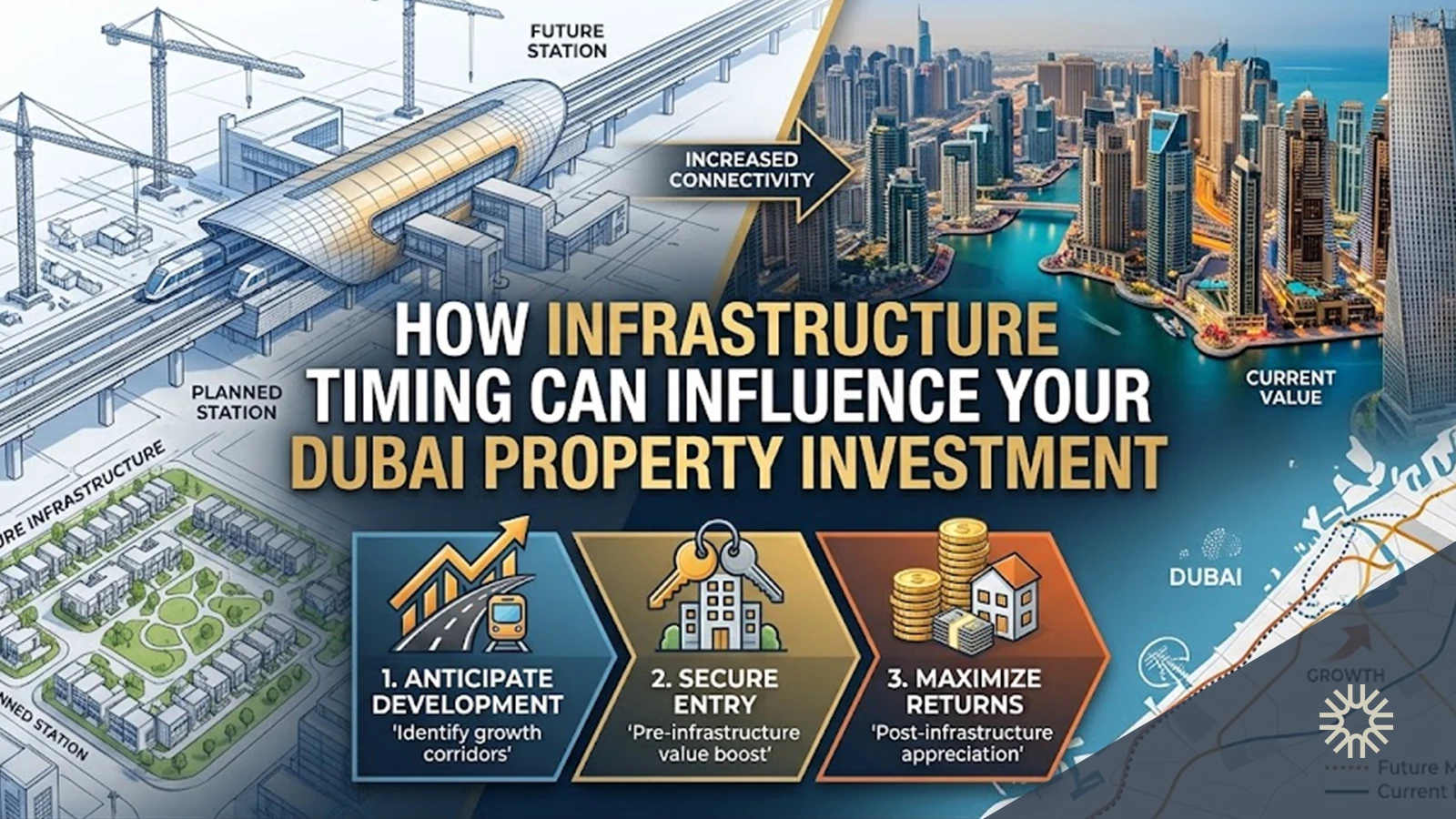
Second, on infrastructure: Creek Harbour will host the Emaar Properties Station, set to be the world's tallest metro station, on the AED 20.5 billion Blue Line Dubai's most significant rail expansion since the original network opened in 2009. That single fact changes the investment thesis for everything within walking distance.

4. The Blue Line Corridor — Dubai land, Silicon Oasis & the Affordable Growth Belt
Speaking of the Blue Line: this 30-kilometre, 14-station project is currently under construction, targeting completion on 9 September 2029, and it will connect nine districts including Dubai land, Dubai Silicon Oasis, International City, Academic City, and Mirdif that are home to roughly one million residents today. The RTA expects it to cut traffic congestion along the corridor by up to 20%.
The market is already pricing this in. Nadd Hessa, part of the Dubai land Residence Complex, posted the steepest year-on-year price growth of any tracked Dubai community at the start of 2026 over 50% earning it a reputation as the city's clearest "affordable growth hub." Our view: areas sitting along a confirmed, funded, under-construction metro line rarely stay undervalued for long. Construction had already reached roughly 10% completion within the first five months, with the RTA targeting 30% by the end of 2026 this is no longer a plan on paper.
5. Jebel Ali & the Southern Waterfront — Logistics Meets Lifestyle
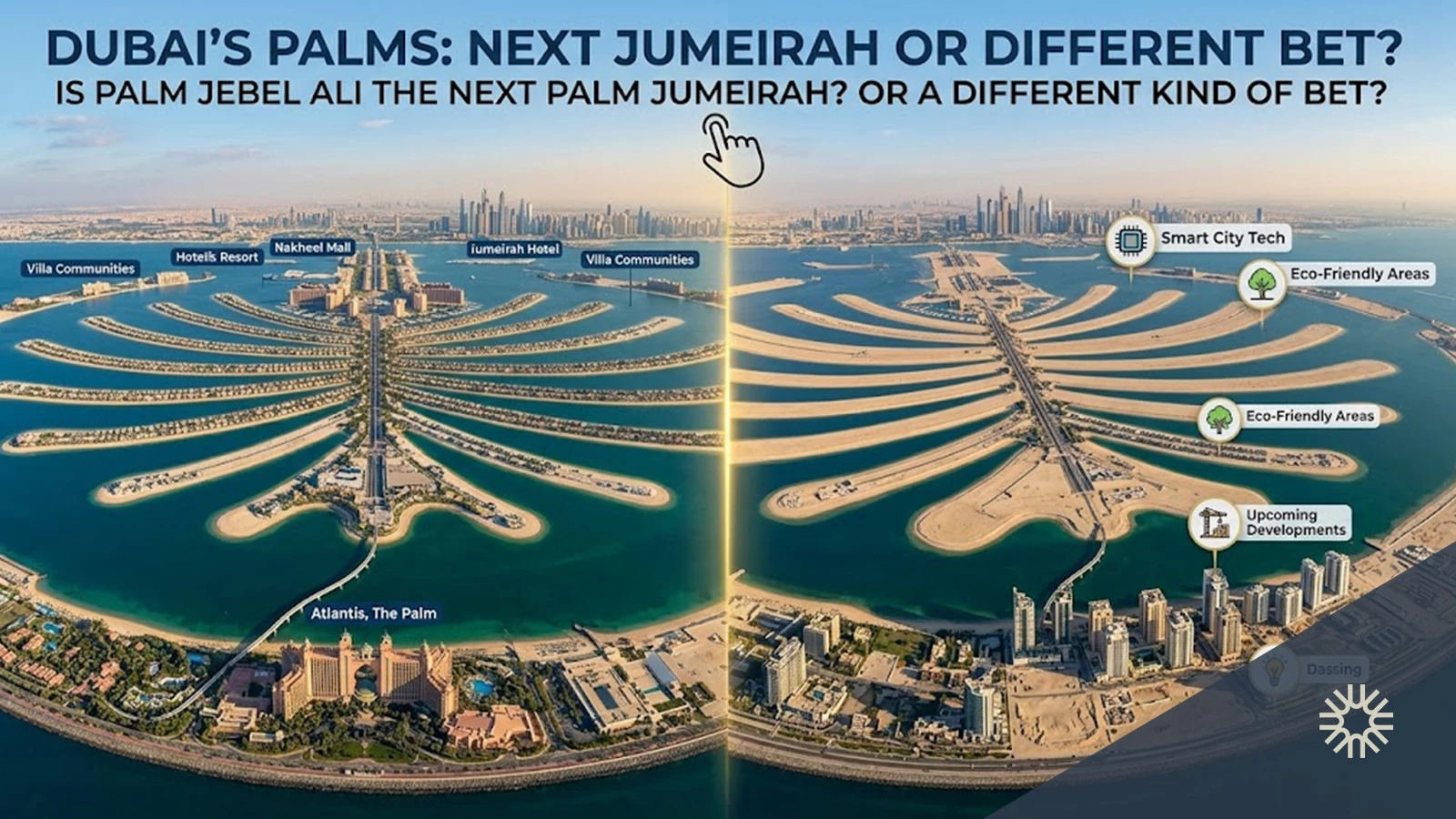
The fifth corridor sits at the intersection of two of Dubai's oldest economic engines DP World's Jebel Ali Free Zone and the emirate's newest waterfront address, Palm Jebel Ali. Palm Jebel Ali now sits in the same "prime waterfront" bracket as Palm Jumeirah and Dubai Maritime City in 2025 transaction data, while the surrounding mainland communities are moving even faster: Jabal Ali First posted 38.5% year-on-year price growth and Al Hebiah Second posted 35.2%, both flagged as outperformers in what the data calls Dubai's "southern expansion corridor."
Add Emirates' new multi-billion-dirham Cabin Crew Village, positioned deliberately between Dubai International and Al Maktoum International, and you have a corridor that's being built for both cargo and community in equal measure.
The Bottom Line
None of these five corridors are secret; the Dubai Land Department publishes the transaction data, and Property Finder tracks the pricing trends openly. What separates a good investment decision from a lucky one is reading that data correctly and acting on it before consensus catches up. That's the work we do every day at Unique Properties.
If any of these corridors caught your attention, our current listings across Dubai South, MBR City, Dubai Creek Harbour, the Blue Line communities, and Jebel Ali are a good place to start to find a property that matches your investment goals, or view properties currently available in each of these growth areas.
Prefer to talk it through first?
Book a consultation with our investment advisory team, and we'll walk you through which corridor fits your budget, timeline, and risk appetite before 2030 closes the window on early entry pricing.Table Of Content
- 1. Dubai South & Al Maktoum International — The Aerotropolis
- 2. Mohammed Bin Rashid City — The New Centre of Gravity
- 3. Dubai Creek Harbour — Already Wired Into Tomorrow's Network
- 4. The Blue Line Corridor — Dubai land, Silicon Oasis & the Affordable Growth Belt
- 5. Jebel Ali & the Southern Waterfront — Logistics Meets Lifestyle
- The Bottom Line
- 1. Dubai South & Al Maktoum International — The Aerotropolis
- 2. Mohammed Bin Rashid City — The New Centre of Gravity
- 3. Dubai Creek Harbour — Already Wired Into Tomorrow's Network
- 4. The Blue Line Corridor — Dubai land, Silicon Oasis & the Affordable Growth Belt
- 5. Jebel Ali & the Southern Waterfront — Logistics Meets Lifestyle
- The Bottom Line